
Smart fitness rings are what happens when a fitness tracker gets tired of being a tiny wrist television. They hide sensors inside a piece of jewelry, collect data throughout the day and night, and turn sleep, resting heart rate, temperature trends, and activity into scores that are either helpful or mildly insulting before breakfast.
The category is growing quickly, but buying one requires more thought than choosing a color. Compatibility, sizing, subscription fees, battery life, app design, and strength-training comfort can matter more than the headline feature list. This guide compares three strong U.S. options: the Oura Ring 4, Samsung Galaxy Ring, and RingConn Gen 2. It also explains why gym-goers should treat ring data as context—not a tiny electronic coach with authority over leg day.
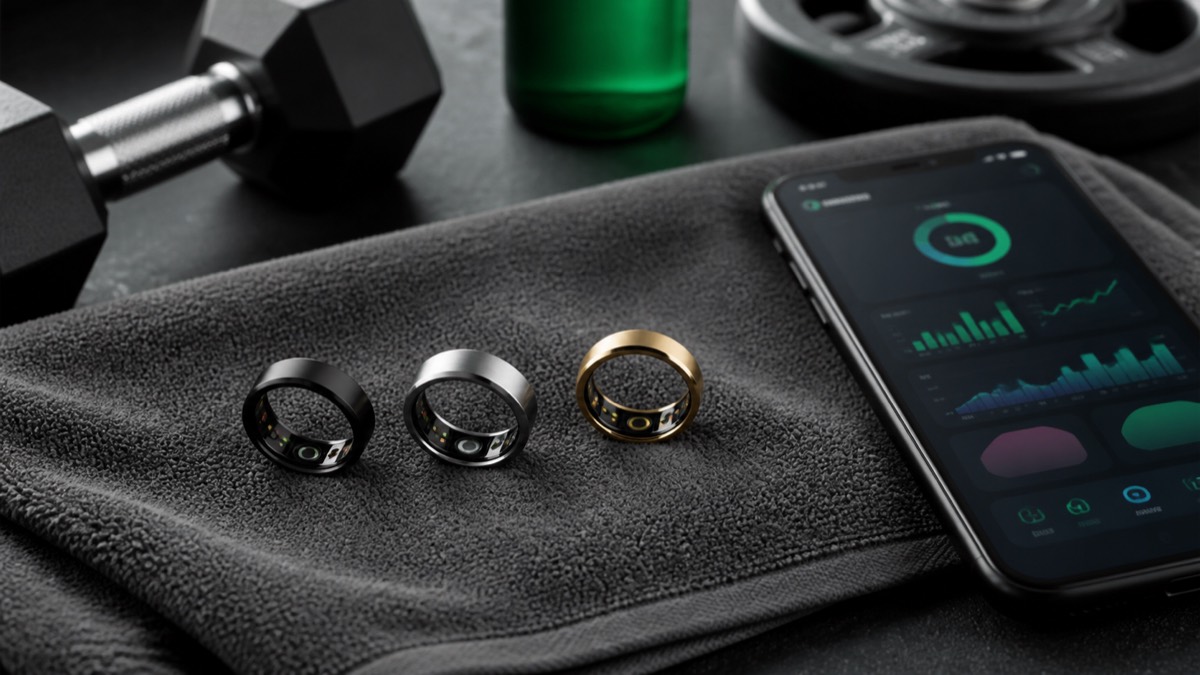
Smart fitness rings compared
| Ring | Typical price | Subscription | Best for | Pros | Cons |
|---|---|---|---|---|---|
| Oura Ring 4 | About $349–$499 depending on finish | Membership required for full insights after trial | Polished sleep and recovery experience | Mature app, strong trend presentation, broad integrations | Ongoing fee, premium finishes cost more |
| Samsung Galaxy Ring | About $399 before sales | No separate subscription required for core features | Samsung Galaxy users | Excellent ecosystem fit, charging case, no mandatory monthly fee | Android/Samsung focus, some insights work best inside Galaxy ecosystem |
| RingConn Gen 2 | About $299–$349 | No subscription | Battery life and value | Long battery claim, charging case, competitive price | Less mature brand ecosystem, app presentation may feel less polished |
Why smart rings are trending
Many people want health and recovery data but do not want another bright screen, another stream of notifications, or a watch on their wrist at night. A ring is small, relatively discreet, and positioned well for continuous pulse measurements. It can collect overnight data without lighting the bedroom every time you roll over. For users who already wear a traditional watch, it also avoids doubling up on wrist hardware.
The strongest smart-ring use case is not live workout guidance. It is pattern recognition. A ring may help you notice that late meals align with restless sleep, that travel changes resting heart rate, or that several hard sessions are followed by reduced recovery signals. Those observations can support better decisions. They are not medical diagnoses, and a daily score should not override symptoms, professional advice, or common sense.
What smart rings track
Most premium rings use optical sensors, temperature sensors, and motion sensors to estimate metrics such as resting heart rate, heart-rate variability, sleep duration, sleep stages, respiratory rate, activity, and recovery. Each company processes raw signals differently, so two rings can produce different scores from the same night. The most useful information is usually your trend within one platform rather than a one-day comparison with somebody else.
Calorie estimates and automatic workout detection deserve healthy skepticism. Wearables make calculations from incomplete information, and strength training is especially difficult to summarize from finger motion. Log workouts when needed, but avoid treating a calorie number as permission, punishment, or a nutrition prescription. The ring is collecting clues, not auditing your character.
Oura Ring 4: best overall app experience
Oura helped turn smart rings into a mainstream category, and Ring 4 reflects years of refinement. The inner surface is smoother than older generations, with recessed sensing components designed to improve comfort. Its app organizes information around readiness, sleep, and activity, then connects those scores to contributing factors. For someone who wants clear explanations rather than a landfill of charts, that presentation is a major advantage.
Oura also supports a broad ecosystem of integrations and has a large user base. The drawback is ownership cost. Ring 4 commonly begins around $349, with premium finishes rising toward $499, and full ongoing insights require a membership after the included trial. Over several years, the subscription can cost as much as a budget fitness tracker. Decide whether the coaching layer is worth that continuing fee.
Pros: polished app, useful sleep and recovery storytelling, comfortable design, extensive trend history, and strong integrations.
Cons: monthly membership for the full experience, expensive finish upgrades, and no display for live workout metrics.
Best for: users who value the most mature recovery platform and will regularly act on its insights.
Samsung Galaxy Ring: best for Galaxy users
Samsung’s Galaxy Ring connects with Samsung Health and fits naturally into a Galaxy phone setup. It collects sleep, activity, and heart data while avoiding a separate mandatory subscription for its central features. The charging case is a practical benefit for travel, and people who also use a Galaxy Watch may appreciate having information managed in the same ecosystem.
The experience is less compelling outside that ecosystem. Confirm phone compatibility and feature requirements before buying. Samsung may also combine or prioritize data differently when its watch and ring are used together, which is useful for committed Galaxy users but irrelevant to an iPhone owner. At roughly $399 before sales, the ring is premium hardware, so ecosystem fit should be a reason to buy—not a detail discovered after checkout.
Pros: no separate monthly fee for core use, convenient charging case, clean Samsung Health integration, and comfortable all-day tracking.
Cons: limited appeal for non-Samsung users, premium initial price, and fewer years of ring-specific refinement than Oura.
Best for: Galaxy phone owners who want recovery tracking without another subscription.
RingConn Gen 2: best value and battery focus
RingConn Gen 2 competes by offering a lower purchase price, no subscription, a portable charging case, and long claimed battery life. That combination matters because charging friction can quietly ruin wearable consistency. A ring gathering no data on the bathroom counter has exceptional privacy but limited usefulness.
RingConn covers the central sleep, activity, stress, and recovery categories, and its value is strong for buyers who want trends without permanent fees. The trade-off is ecosystem maturity. The app and interpretation layer may feel less refined than Oura’s, integrations can be narrower, and long-term support is a reasonable consideration with any younger platform.
Pros: competitive price, no subscription, strong battery emphasis, and a travel-friendly charging case.
Cons: less polished interpretation, smaller ecosystem, and fewer established third-party integrations.
Best for: value-conscious buyers who prioritize battery life and dislike recurring fees.
What about Ultrahuman?
Ultrahuman became known for a subscription-free Ring AIR, but U.S. availability changed following intellectual-property disputes. In 2026 the company announced the newer Ring PRO for the U.S. market. Because availability, preorder bundles, and delivery timing can change, shoppers should verify the official U.S. store rather than relying on older Ring AIR comparisons. It may become a meaningful alternative, but buying advice should reflect what can actually be supported and delivered now.
Smart rings and weight training
Metal rings and barbells are not ideal friends. A ring can feel uncomfortable against a knurled bar, interfere with grip, scratch, or become trapped under load. Many lifters remove smart rings for heavy pulling, pressing, kettlebells, and machine handles. Store the ring safely and log the session later if the app permits. Silicone covers may reduce scratches but do not eliminate pressure or entrapment risks.
This means a smart ring is rarely the best device for live strength-workout tracking. A watch, chest strap, training log, or simple timer may serve that job better. The ring’s value appears after training: sleep, overnight recovery, resting trends, and the broad relationship between workload and how you feel.
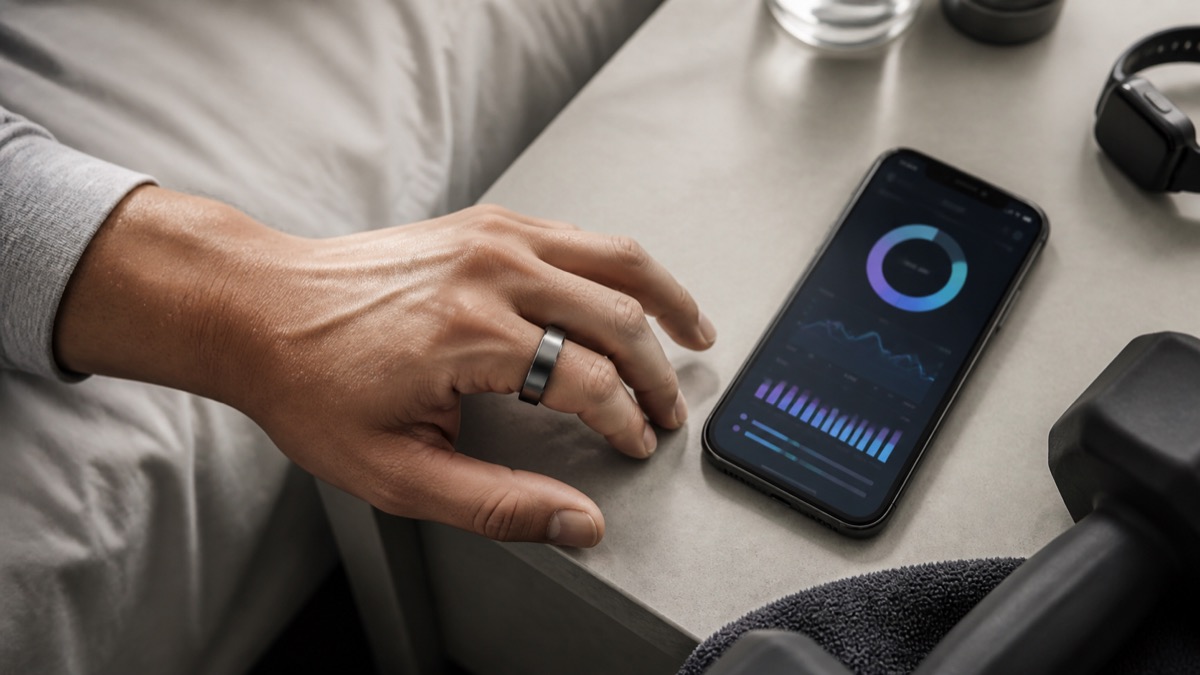
Accuracy: what the numbers can and cannot tell you
Consumer wearables are not laboratory instruments. Fit, skin temperature, movement, circulation, tattoos, illness, alcohol, travel, and sensor contact can affect readings. Sleep-stage estimates are models, not direct brain measurements. Treat a single unusual result as a reason to observe, not panic. Repeated changes accompanied by symptoms deserve appropriate medical attention, not a late-night internet diagnosis.
Consistency improves usefulness. Wear the ring on the recommended finger, use the sizing kit, keep sensors clean, and allow several weeks for a personal baseline. Compare trends with your own notes. “Recovery score dropped after three short nights” is actionable. “My friend scored six points higher” is mostly an invitation to become competitive about sleeping, which is an impressively stressful hobby.
How to choose the right smart ring
Start with phone compatibility
Check the supported operating system and any brand-specific requirements. Do not assume Bluetooth equals universal compatibility. If you plan to keep the ring through your next phone upgrade, consider whether you are comfortable remaining in the same ecosystem.
Calculate three-year cost
Add the ring, premium finish, membership, protection plan, and possible sizing or replacement costs. A subscription-free ring may save substantially over time, while a paid platform may deliver better interpretation. Neither model is automatically superior; the question is whether you use what you pay for.
Use the sizing kit
Finger size changes with temperature, time of day, training, and travel. Wear the sizing sample for at least a full day and overnight. It should remain secure without causing numbness or being difficult to remove. Do not select a size based only on a jewelry ring from another brand.
Choose insights, not maximum metrics
More charts are not always more useful. Look at screenshots and reviews of the app. If you want concise guidance, prioritize presentation. If you enjoy exploring raw trends, choose export tools and integrations. The device should match how your brain makes decisions.
Review privacy and data controls
A smart ring can collect sleep timing, heart-rate trends, temperature signals, workouts, and personal notes. Before buying, read the current privacy policy and check whether you can download or delete your data. Review which integrations receive information and disable connections you do not use. Health data is useful precisely because it is personal, so convenience should not replace a quick privacy check.
Also consider the sealed battery. Smart rings are tiny, waterproof electronics, and most are not designed for a simple at-home battery swap. Capacity will decline over time. Warranty length, replacement terms, and the brand’s support record therefore belong in the value calculation alongside color and finish.
Who should skip a smart ring?
Skip one if you primarily want live pace, GPS routes, detailed gym-set detection, or a screen for intervals. A sports watch may be better. People who cannot comfortably wear rings, work around machinery, or regularly lift without removing jewelry may also find the format inconvenient. Anyone prone to anxiety from health metrics should consider whether more data will improve behavior or simply provide new material for worry.
Final verdict
The Oura Ring 4 offers the most polished all-around recovery experience, provided you accept the membership. The Samsung Galaxy Ring is the natural choice for committed Galaxy users who want core features without a separate monthly fee. The RingConn Gen 2 delivers strong value, battery convenience, and subscription-free ownership.
Buy a smart ring to notice patterns, not to outsource every decision. The best device is the one you will wear consistently, charge reliably, and consult without letting one score boss you around. Your body is still allowed to have an opinion—even when the app has chosen a very confident shade of red.
Keep learning: beginner guide to recovery scores and fitness tracker buying guide offer practical next steps on this topic.
Leave a Reply