
Walking pads are having a very big moment for machines that are, by design, quite flat. They appear under standing desks, beside sofas, and in social videos where somebody casually walks through a full workday without spilling coffee. The appeal is obvious: a compact treadmill can make daily movement easier when weather, commuting, or a crowded schedule keeps pushing exercise to the bottom of the list.
But “viral” is not the same as “right for your home.” Some walking pads are genuinely compact; others are compact only if your storage space is the size of a small garage. Some are quiet enough for calls, while others announce every footstep like a tiny parade. This guide compares three popular approaches—the premium folding WalkingPad R2, the versatile UREVO Strol 2E, and the budget-friendly Goplus 2-in-1—so you can choose based on space, pace, comfort, and value rather than the most enthusiastic thirty-second video.
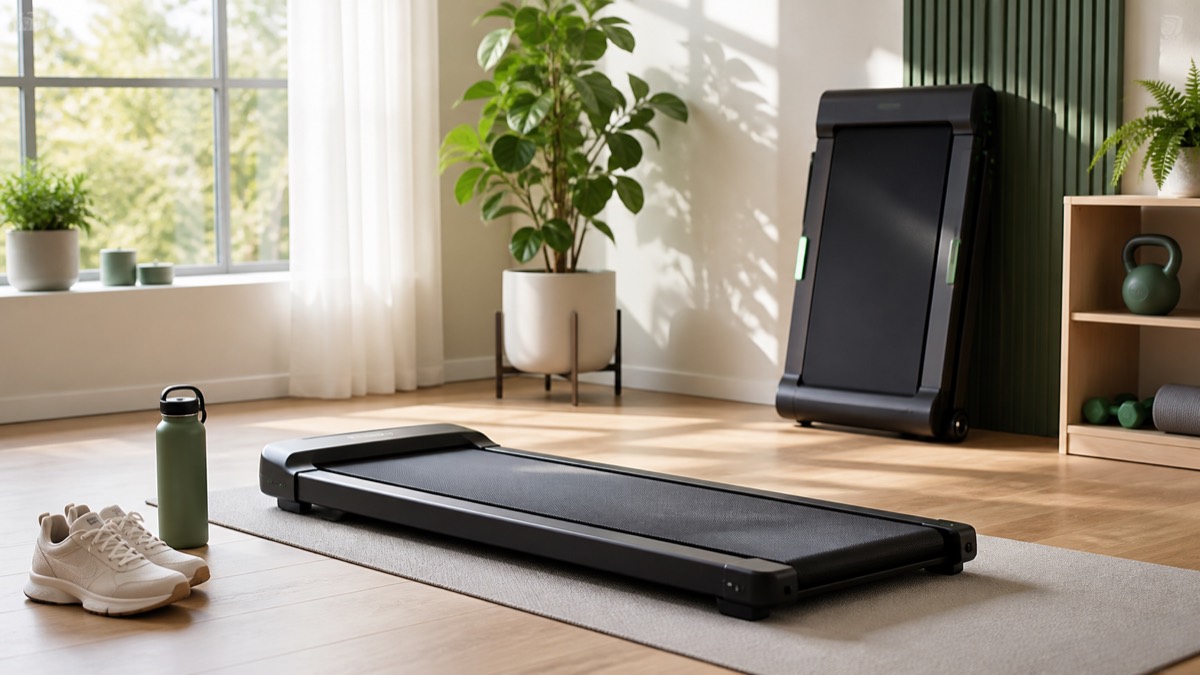
Best walking pads at a glance
| Model | Typical price | Best for | Main advantages | Main drawbacks |
|---|---|---|---|---|
| WalkingPad R2 | About $700–$1,000 | Premium folding design | Folds in half, walking and light running modes, polished storage design | Expensive, heavier than basic pads, smaller running deck than a full treadmill |
| UREVO Strol 2E | About $300–$500 | Walking plus occasional jogging | 2-in-1 format, useful controls, strong middle-ground value | Still needs storage clearance, app features may not matter to everyone |
| Goplus 2-in-1 | About $250–$400 | Budget-conscious beginners | Lower entry price, walking and upright modes, widely available | More basic finish, modest deck, quality can vary by version |
Why walking pads are trending
A walking pad solves a boring problem, which is often more useful than solving an exciting one. Many people do not need another intense workout; they need a practical way to move on days filled with meetings, family responsibilities, or bad weather. A pad can turn part of a television show, a phone call, or a block of simple computer work into easy activity. It lowers the “activation energy” required to begin. No gym bag, no drive, and no negotiation with rain.
That convenience should not be confused with magic. Walking while working is not suitable for every task, and a walking pad will not automatically produce a certain number of steps or calories. You still have to use it. The best models simply make use more likely by being comfortable, easy to start, and easy enough to store that you do not begin resenting the machine after three days.
How we compared these walking pads
We focused on the things that matter after the unboxing excitement fades: usable belt space, speed range, stability, noise, storage, controls, safety features, and total value. Maximum speed matters less than many buyers think. If your main goal is walking under a desk, a smooth low-speed experience is more important than a heroic top number you will never use. Likewise, a lightweight machine is helpful only if it still feels planted beneath you.
We also considered household reality. A pad stored under a bed must actually fit under that bed. Measure the machine in its stored position, then measure the narrowest point along the route to storage. Include handles, wheels, and the height of rugs. This five-minute job prevents the classic home-fitness experience of discovering that your “easy-storage” treadmill now lives permanently in the dining room.
WalkingPad R2: best premium folding option
The WalkingPad R2 stands out because its deck folds across the middle. That design significantly reduces its stored length, which can be useful in apartments or rooms where a long, rigid pad has nowhere graceful to go. It supports walking with the rail folded and faster movement with the rail raised, giving it more flexibility than a walking-only slab. The presentation is clean, the controls are straightforward, and the overall product feels designed for people who care as much about storage as speed.
The folding mechanism is also the reason to think carefully before paying the premium. You are buying a specific engineering solution, not automatically a better workout. The R2 remains a substantial machine, and moving it may still be awkward for someone with limited strength or mobility. Its running area is more compact than a conventional treadmill, so taller users or people with a long stride may prefer a full-size deck for faster sessions.
Pros: unusually compact folded footprint, attractive design, walking and light-running versatility, and a more polished experience than many budget pads.
Cons: high price, meaningful weight, and less room for confident running than a traditional treadmill.
Choose it if: storage length is your biggest problem, you value a refined design, and you will use both walking and upright modes often enough to justify the cost.
UREVO Strol 2E: best balance for most homes
The UREVO Strol 2E occupies the sensible middle lane. It is designed to work as a low-profile walking pad and as a compact treadmill with the rail raised. That makes it appealing for someone who wants relaxed steps during the day and occasional quicker sessions without buying two machines. UREVO has become a recognizable name in compact cardio equipment, and the Strol line typically combines practical controls with pricing below the premium folding category.
Its biggest strength is versatility per dollar. Its biggest weakness is that versatility still requires space. A 2-in-1 model is not invisible furniture. Check the opened dimensions, folded or lowered-rail dimensions, and the clearance needed to move it. Also decide whether app connectivity is genuinely useful to you. A graph is lovely, but a paper note saying “walked twenty minutes” has never demanded a firmware update.
Pros: good mix of walking and jogging capability, mid-range price, useful everyday controls, and a format that can serve more than one type of session.
Cons: less compact than a true folding-deck model, modest running area, and connected features that may add complexity without improving consistency.
Choose it if: you want one compact machine for walking and occasional jogging, but do not want to pay premium-folding prices.
Goplus 2-in-1: best budget walking pad
The Goplus 2-in-1 is the gateway option. Numerous versions are sold through major retailers, usually at a price that makes testing the walking-pad habit less intimidating. With the rail lowered, it can support easy walking; with the rail raised, many versions allow a faster pace. For beginners who want simple indoor movement rather than a luxury cardio centerpiece, that formula is attractive.
Budget equipment requires closer specification checking because model names, motors, speed limits, and accessories can vary. Confirm the exact listing rather than assuming every Goplus 2-in-1 is identical. Look at the return policy, warranty, belt dimensions, user-weight rating, and whether the remote is required for operation. A remote is convenient until it vanishes into the same alternate dimension that collects single socks.
Pros: accessible price, basic 2-in-1 flexibility, simple setup, and a reasonable way to learn whether indoor walking fits your routine.
Cons: less refined materials and cushioning, potentially louder operation, and more variation among versions and sellers.
Choose it if: price is the main constraint and your plan centers on controlled walking rather than serious running.
Walking pad features that actually matter
Belt size and stride comfort
A narrow or short belt can feel fine during a two-minute test and annoying during a forty-minute walk. Taller users and people who naturally move side to side should prioritize deck dimensions. If you plan to type while walking, extra width provides a little margin when your attention is divided. Start slowly and keep the workspace free of cords, pets, and anything else determined to become a surprise obstacle.
Noise and vibration
Motor noise is only part of the story. Footfalls can transfer through hard floors and become much louder in the room below. A suitable equipment mat may reduce movement and protect flooring, although it cannot make every apartment silent. If calls are important, walk during a test call before declaring victory. Microphones are remarkably talented at finding noises you had stopped noticing.
Storage and moving weight
Transport wheels help when the machine is already aligned correctly. They do not make a heavy unit weightless. Check whether you must lift one end, how high it needs to rise, and whether the route includes thresholds. If daily storage is difficult, the pad may be used less often. Sometimes the best location is a dedicated corner where setup takes seconds, even if the machine remains visible.
Controls and emergency stopping
Remote controls, consoles, and apps should let you change speed without awkward movements. Upright treadmill modes should include an appropriate safety system. Read the manual before the first session, keep children away from the machine, and stop the belt completely before stepping off. A walking pad is friendly-looking equipment, but it is still a moving motorized surface.
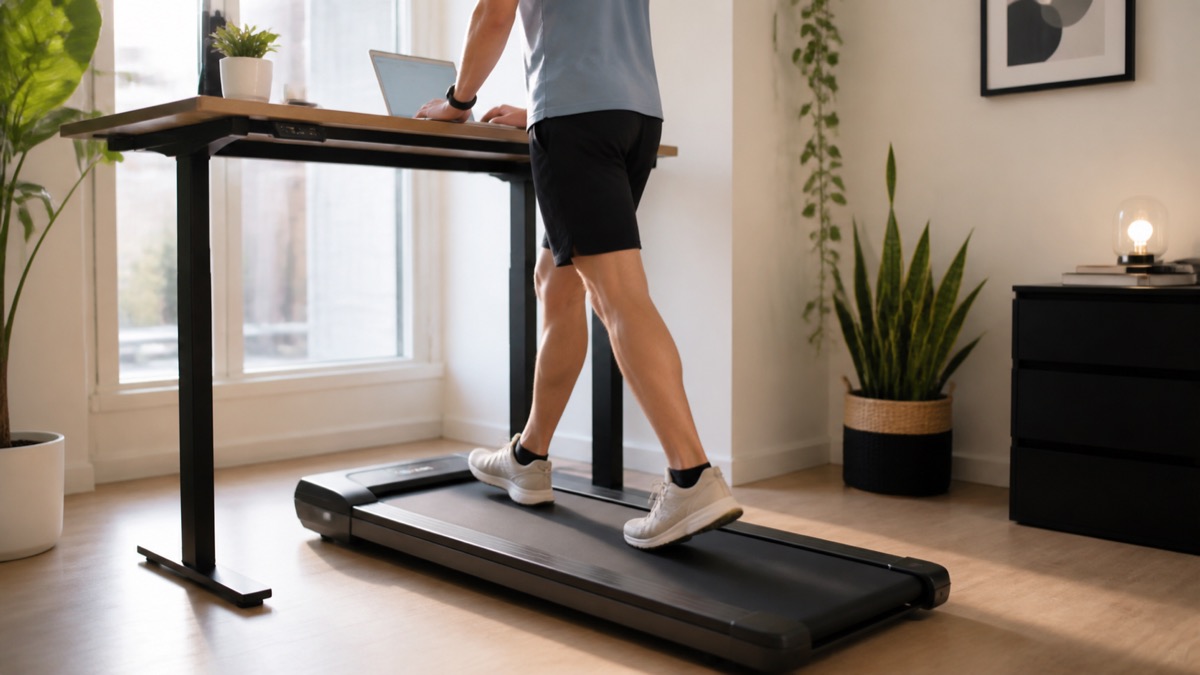
Can you work while using a walking pad?
Yes, but task selection matters. Reading, listening, routine email, and simple calls may work at an easy pace. Precise design work, intense writing, spreadsheets that already make you question your life choices, and camera-on presentations may be less suitable. Begin at a very slow speed for ten to fifteen minutes and evaluate posture, concentration, and typing accuracy.
Set the desk so your shoulders remain relaxed and the screen sits comfortably in front of you. Avoid leaning onto the desk for support. Alternate walking with sitting and normal standing rather than trying to walk for an entire workday immediately. More is not always better; the goal is sustainable movement without creating new aches or reducing work quality.
Who should skip a walking pad?
A walking pad may be a poor fit if you need handrails for balance, have a gait or medical issue that requires supervision, want serious incline training, or primarily intend to run. Anyone experiencing dizziness, chest discomfort, unusual shortness of breath, or pain should stop and seek appropriate professional advice. People in very small upstairs apartments should also investigate vibration and lease rules before inviting a motorized neighbor into the building.
Final verdict
The WalkingPad R2 is the premium choice when folding storage is worth paying for. The UREVO Strol 2E offers the most balanced mix of walking, occasional jogging, and price. The Goplus 2-in-1 is the practical budget experiment for beginners who mainly want indoor steps.
Whichever model you choose, compare the current warranty and seller return window before ordering. Compact treadmills contain moving parts, and responsive support matters more than a bonus app or an impressive collection of preset modes.
Choose the machine that fits your space and routine, not the one with the most cinematic advertisement. Measure first, confirm the exact specifications, and give yourself a simple schedule such as twenty minutes after lunch four days per week. A walking pad cannot walk for you—rude, honestly—but the right one can make starting wonderfully uneventful.
Keep learning: walking-pad workout plan and Zone 2 cardio plan offer practical next steps on this topic.
Leave a Reply