
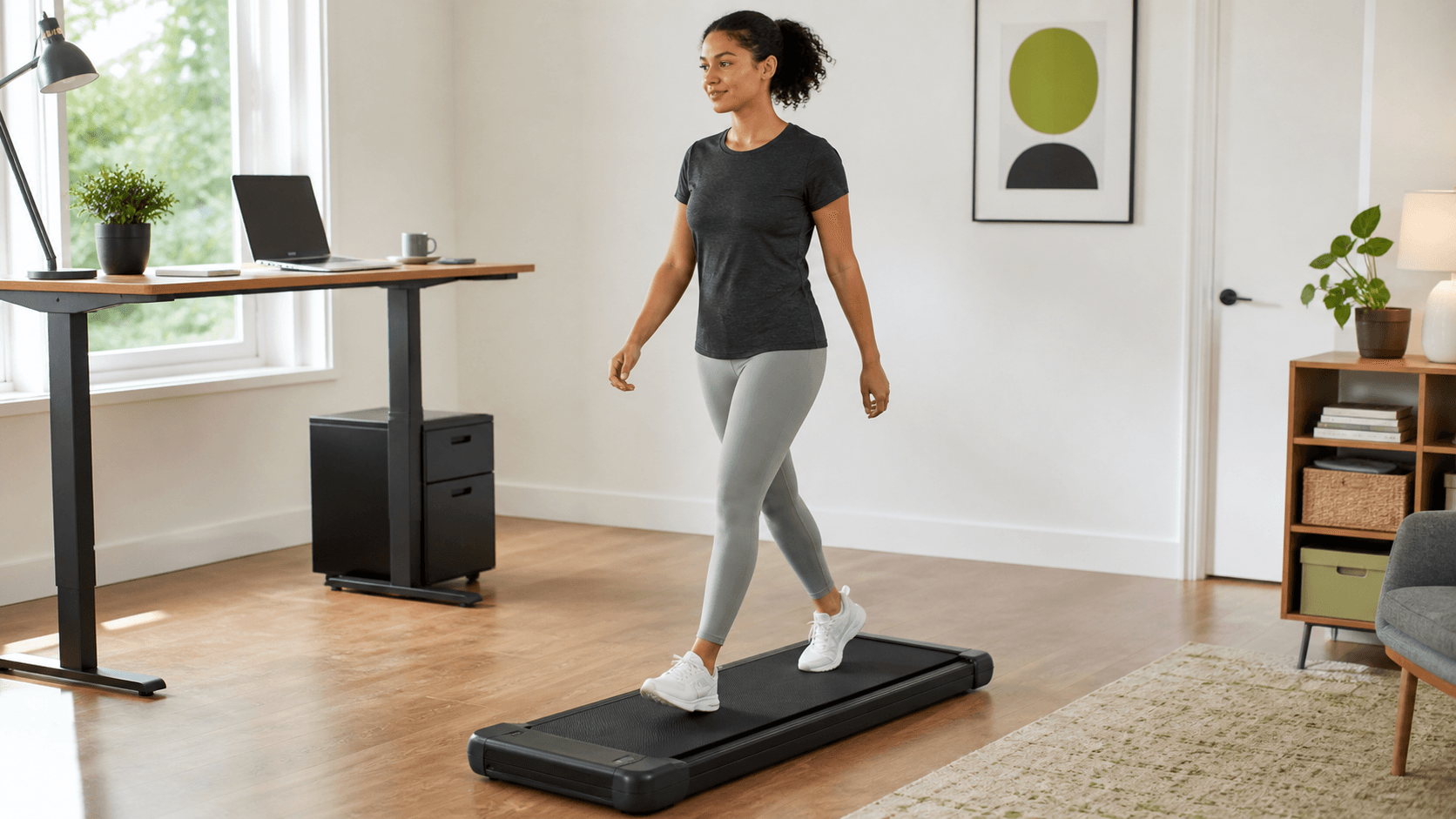
A walking pad workout plan can turn an ordinary corner of your home or office into a surprisingly useful cardio space. You do not need sprint speeds, dramatic inclines, or a coach yelling motivational poetry at you. You need a safe pace, repeatable sessions, and enough progression to keep your body adapting.
This four-week beginner plan starts gently and builds toward regular 25- to 35-minute walks. It works for a compact walking pad, an under-desk treadmill, or a standard treadmill used at low speed. If you are still shopping, see our walking-pad comparison for small spaces before choosing a model.
Quick answer: Begin with 10 to 15 minutes at a comfortable pace, three days per week. Add time before adding speed. By week four, aim for four sessions totaling roughly 100 to 130 minutes.
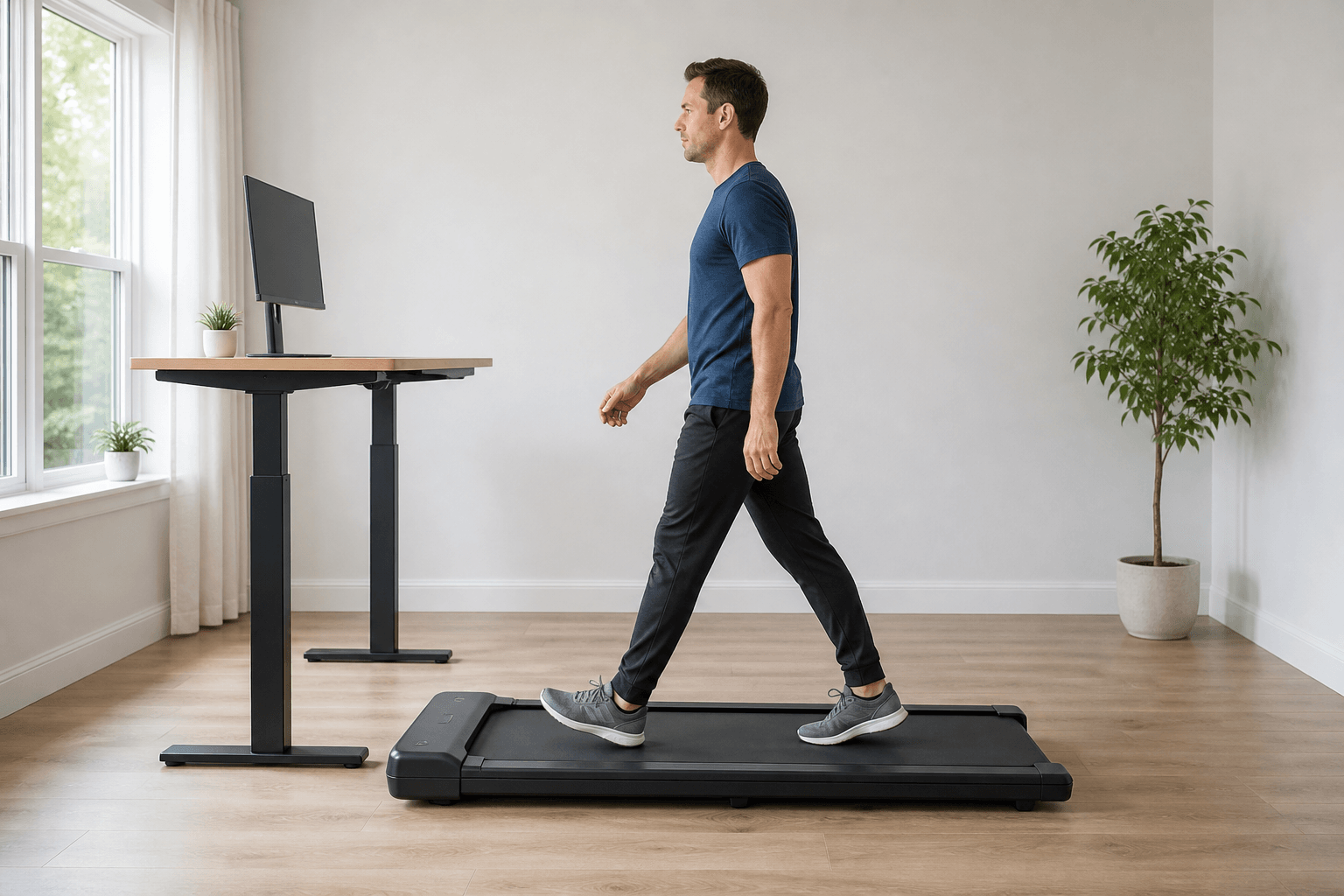
Why use a walking pad?
A walking pad makes movement easier to fit into a busy day. It can replace part of the time you would otherwise spend sitting, give you a weather-proof walking option, and provide low-impact cardio without a trip to the gym. Research on treadmill workstations suggests they can increase walking time and energy expenditure, although results vary and they are not a magic solution for weight loss.
U.S. physical activity guidelines recommend that adults work toward 150 to 300 minutes of moderate aerobic activity each week, plus muscle-strengthening work on at least two days. Beginners do not need to reach that total immediately. Short sessions count, and a walking pad can help you accumulate them.
Choose your starting speed
Ignore the person online casually typing a novel while walking at 4 mph. Your correct speed is the one that lets you walk smoothly without gripping furniture, drifting toward the rear belt, or stomping like a startled dinosaur.
- Very easy: 1.0 to 1.5 mph for learning the belt or working at a desk.
- Easy: 1.5 to 2.2 mph for comfortable continuous walking.
- Brisk: 2.2 to 3.0 mph for a purposeful cardio session, if your machine and balance allow it.
Speed displays and belt lengths differ between models, so treat these ranges as starting references rather than rules. Use the talk test: during an easy session you should be able to speak in full sentences. Stop if you feel dizzy, unusually short of breath, or unsteady.
The 4-week walking pad workout plan
| Week | Sessions | Workout | Main goal |
|---|---|---|---|
| 1 | 3 | 10–15 minutes at an easy pace | Learn safe setup and finish feeling fresh |
| 2 | 3–4 | 15–20 minutes; add four 30-second brisk segments | Build consistency |
| 3 | 4 | 20–30 minutes; alternate 3 easy minutes with 1 brisk minute | Increase total time |
| 4 | 4 | 25–35 minutes; include six 1-minute brisk segments | Create a repeatable routine |
Week 1: Learn the machine
Walk for 10 to 15 minutes on three nonconsecutive days. Start at the lowest practical speed and increase only when your stride feels natural. Keep your eyes forward, relax your shoulders, and let your arms swing if you are not working at a desk. The session should feel almost too easy. That is a feature, not a bug.
Week 2: Add small speed changes
Complete three or four 15- to 20-minute sessions. After five easy minutes, add four 30-second brisk segments with at least 90 seconds of easy walking between them. Increase the belt by a small amount rather than jumping straight to the maximum.
Week 3: Build useful volume
Walk four times for 20 to 30 minutes. During two sessions, alternate three easy minutes with one brisk minute for four to six rounds. Keep the other walks easy. This mixture develops fitness without making every session a miniature survival documentary.
Week 4: Set your normal routine
Complete four sessions of 25 to 35 minutes. One session may remain short and easy. In another, include six one-minute brisk efforts separated by two easy minutes. Your final weekly schedule should fit your life. A plan you repeat beats an ambitious plan that becomes furniture by next Tuesday.
A 20-minute walking pad session
- Walk easily for 4 minutes.
- Increase to a purposeful pace for 2 minutes.
- Return to an easy pace for 2 minutes.
- Repeat the two-minute brisk and two-minute easy pattern three times.
- Cool down easily for 4 minutes.
Pair walking with two or three weekly strength sessions for a balanced routine. Our 3-day beginner gym plan provides a straightforward place to start.
How to walk while working
Desk walking should usually be slower than exercise walking. Begin around 1 mph for a simple task such as reading. Save precise mouse work, important calls, and detailed spreadsheets for standing or sitting until you know how movement affects your concentration. Use short 10- to 20-minute blocks and keep the desk high enough that your shoulders stay relaxed.
Safety and setup checklist
- Place the machine on a level surface with clear space behind it.
- Wear secure athletic shoes and tie the laces.
- Use the safety key or emergency stop when provided.
- Do not step onto a moving belt.
- Keep children, pets, cords, and loose clothing away from the belt.
- Follow the manufacturer’s user-weight and operating-time limits.
- Progress time before speed, and change only one variable at a time.
If you have a cardiovascular condition, balance problem, recent injury, pregnancy-related restriction, or another health concern, ask a qualified healthcare professional whether this plan is appropriate for you.
Common walking-pad mistakes
Looking down constantly: Glance at the belt when starting, then look ahead. Chasing calorie numbers: Machine estimates are rough; use minutes, distance, or perceived effort instead. Walking too fast while typing: Productivity and balance both suffer. Skipping maintenance: Keep the belt aligned and lubricated according to the manual. Adding time too aggressively: Tender feet and shins are not bonus points.
Frequently asked questions
Is 30 minutes on a walking pad enough?
Thirty minutes is a useful session, especially when repeated through the week. Your total activity, intensity, strength training, sleep, and nutrition matter more than any single workout.
Can beginners use a walking pad every day?
Many healthy adults can tolerate easy daily walking, but beginners should build gradually. Alternate longer and shorter sessions and take a rest day when soreness changes your normal stride.
Can a walking pad replace outdoor walking?
It can provide convenient cardio, but outdoor walking adds terrain changes, fresh air, and environmental variety. Use both when practical.
The bottom line
A good walking pad workout plan is deliberately simple: begin slowly, add minutes, introduce small brisk intervals, and choose a schedule you can repeat. Four consistent weeks will teach you more than one heroic session followed by a long relationship with the sofa.
Sources: Physical Activity Guidelines for Americans; systematic review of treadmill desks.
Leave a Reply