
Creatine gummies are the supplement industry’s answer to a question nobody knew was urgent: “What if my daily scoop had the personality of candy?” They are convenient, portable, and significantly more cheerful than a tub of white powder. They are also usually more expensive, may include sweeteners or extra ingredients, and require careful label reading to confirm how much creatine a full serving provides.
Creatine monohydrate powder remains the plain, well-studied benchmark. Gummies can deliver the same ingredient, but format affects price, serving size, stability, and quality control. This guide compares Create creatine gummies, SWOLY creatine gummies, and Optimum Nutrition micronized creatine powder. It explains cost per serving, label details, pros and cons, and who may benefit from each format. This is general educational information, not personal medical advice.
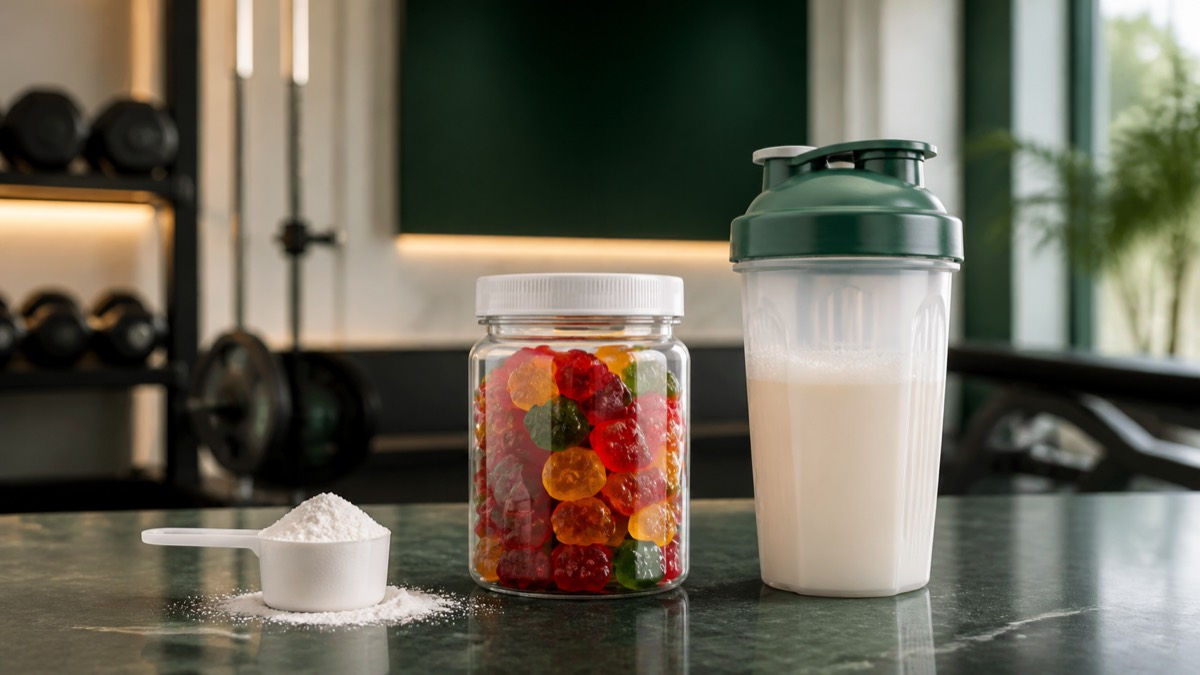
Creatine gummies vs powder: quick comparison
| Product | Typical price | Creatine per serving | Best for | Pros | Cons |
|---|---|---|---|---|---|
| Create Creatine Gummies | About $48 subscription or $56–$60 one-time for 30 days | About 4.5 g from three gummies | Premium convenience and flavor variety | Portable, individually dosed, NSF Certified for Sport options | High daily cost, multiple gummies, added ingredients |
| SWOLY Creatine Gummies | About $28 subscription or $33 one-time | 4 g per serving | Lower-priced gummy format | Easy routine, flavored, less expensive than many gummy competitors | Still costs more than powder, check serving and sweeteners |
| Optimum Nutrition Micronized Creatine Powder | About $20.49 for 60 servings | 5 g per serving | Value and straightforward dosing | About $0.34 per serving, one ingredient in unflavored version, widely available | Needs mixing, less convenient for travel, gritty if mixed poorly |
What creatine does
Creatine is a compound stored primarily in muscle, where it helps support rapid energy production. The National Institutes of Health Office of Dietary Supplements notes that creatine supplements can improve strength, power, and performance during repeated short bursts of intense effort, although individual results vary. Creatine monohydrate is the most widely used and studied supplemental form.
Creatine does not build muscle while you sit beside the container thinking athletic thoughts. Its value appears when supplementation supports consistent resistance or high-intensity training. Sleep, food, progressive programming, and recovery still matter. A colorful gummy may make the habit easier, but it has not discovered a loophole in physiology.
How much creatine do people typically use?
Research commonly uses a maintenance intake of roughly three to five grams per day. Some protocols begin with a short loading phase of around twenty grams divided into several doses, but loading is not required to use creatine. A steady daily maintenance amount can raise muscle creatine stores over time. Personal needs and medical considerations vary, so consult a qualified clinician when appropriate.
Label math matters with gummies. A front label may emphasize the amount in one serving, while a serving may contain three, four, or five pieces. Check the Supplement Facts panel rather than assuming one gummy equals one daily serving. Otherwise your “thirty-day bottle” may perform a disappearing act in under two weeks.
Why creatine gummies are trending
Powder is inexpensive and effective, but it is not exciting. Gummies remove measuring, mixing, and the occasional cloud of powder across a black shirt. They travel easily and can attach to an existing habit such as breakfast. For someone who repeatedly forgets powder, convenience can improve consistency—and consistency matters more than winning an argument about the theoretically perfect format.
Social media also favors products that look good on camera. A jar of bright gummies creates a clearer visual story than a scoop dissolving slowly in water. That does not make gummies ineffective; it simply means the popularity contains both practical benefit and excellent marketing. Your job is to determine how much that convenience is worth per day.
Create Creatine Gummies: best premium gummy
Create has built its brand around creatine in convenient formats. Its current gummies list 1.5 grams of creatine monohydrate per gummy, making three pieces approximately 4.5 grams. The company sells several flavors and package sizes, with a one-month one-time purchase around $56 to $60 and subscription pricing near $48. Larger bundles can reduce daily cost.
Create’s appeal is polish: flavor selection, clear serving structure, travel convenience, and certified options for athletes who value third-party sport testing. The drawback is price. Compared with powder at roughly thirty to fifty cents per serving, paying around $1.50 to $2 per day is a substantial convenience tax. Over a year, the difference can fund quite a lot of actual food—or an impressive number of gym socks.
Pros: convenient dosing, many flavors, portable format, established brand, and sport-certified options.
Cons: premium cost, multiple gummies per serving, flavor ingredients that not everyone wants, and more packaging than a simple tub.
Best for: people who dislike powder enough that they routinely skip it and are comfortable paying for consistency.
SWOLY Creatine Gummies: best value gummy
SWOLY lists four grams of creatine monohydrate per serving and commonly prices a bottle around $33 for a one-time purchase, with subscription discounts near $28. That makes it less expensive than many premium gummy competitors while retaining the flavored, grab-and-go experience.
The four-gram dose fits within the commonly used maintenance range, but buyers should verify the current number of gummies per serving, bottle count, ingredients, and testing information. A lower price does not remove the need for quality checks. Supplements are not evaluated like prescription medicines before sale, so transparent labels and credible independent testing deserve attention.
Pros: lower gummy price, convenient four-gram serving, easy travel, and a format that may improve adherence.
Cons: costs more than powder, includes flavor and texture ingredients, and requires checking the testing and serving details.
Best for: buyers committed to gummies who want a less expensive entry point.
Optimum Nutrition creatine powder: best overall value
Optimum Nutrition’s unflavored micronized creatine powder provides five grams of creatine monohydrate per serving. The official U.S. listing recently showed a sixty-serving container at $20.49, or approximately $0.34 per serving. That is the central advantage of powder: a full researched-style serving at a fraction of typical gummy cost.
Micronized powder is processed into smaller particles to help mixing, although it may not completely disappear in cold liquid. Stir it into water, juice, or a shake, then drink before it settles. Timing is less important than regular use for most people. The unflavored version keeps the ingredient list simple, which makes it easier to understand exactly what you are taking.
Pros: excellent cost per serving, five-gram scoop, simple unflavored formula, wide availability, and decades of research on the ingredient form.
Cons: requires measuring and mixing, can feel gritty, needs a container when traveling, and may be easier to forget.
Best for: most budget-conscious beginners and anyone who already uses a daily drink or shake.
Do gummies work as well as powder?
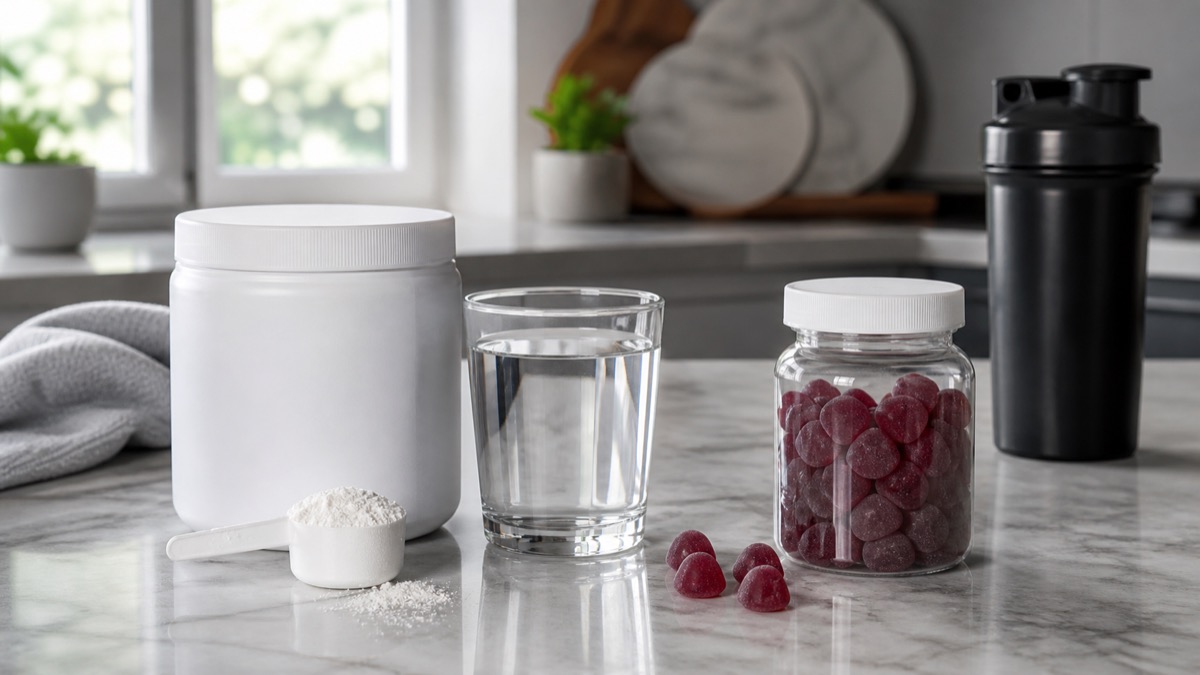
If a gummy reliably delivers the stated amount of stable creatine monohydrate, the active ingredient can serve the same basic purpose. The uncertainty is not that the body sees a gummy and becomes offended. The concern is product formulation and quality: creatine can degrade in certain wet or acidic environments, and independent testing has raised questions about content variation among some gummy products.
Choose products with transparent Supplement Facts, lot-specific or credible third-party testing, realistic claims, and clear storage instructions. Sport-tested certifications matter for competitive athletes concerned about prohibited contaminants. Do not assume phrases such as “lab tested” mean an independent organization tested the finished product for label accuracy.
Cost comparison over one year
At approximately $0.34 per serving, powder can cost around $124 for 365 servings before discounts. A gummy costing $1.50 per day reaches about $548 per year; at $2 per day, it reaches $730. Exact totals depend on bundles and subscriptions, but the gap is large. The gummy premium may still be worthwhile if powder always goes unused. An inexpensive product you never take has a remarkably poor cost per successful day.
Calories, sugar, and extra ingredients
Gummies require ingredients that create flavor, sweetness, and texture. Review calories, added sugars or sugar alcohols, fiber, allergens, and any extra active ingredients. Sugar-free does not automatically mean digestive-system-free; some sweeteners or fibers can cause discomfort in sensitive people. Powdered creatine monohydrate is usually easier for buyers who want a single-ingredient option.
Safety and side effects
The NIH reports that creatine appears safe for healthy adults when used appropriately, including longer-term use studied over several years. Water-weight gain is common because creatine increases water retention in muscle. Some people experience gastrointestinal discomfort. Taking a moderate dose with food or dividing it may help, but persistent symptoms deserve professional advice.
People with kidney disease, significant medical conditions, pregnancy, breastfeeding, medication concerns, or upcoming laboratory tests should speak with a healthcare professional before supplementation. Creatine can affect blood creatinine measurements, so tell clinicians what you use. Never replace medical care with a product review, no matter how charming the table colors are.
How to choose between gummies and powder
Choose gummies when convenience solves a real problem
If you travel often, hate mixed powder, or repeatedly forget supplements unless they are ready to eat, gummies may earn their premium. Select a product with a maintenance-range serving and credible finished-product testing. Store it according to the label, especially around heat and moisture.
Choose powder for simplicity and price
If you can attach one scoop to breakfast or a post-workout shake, powder is difficult to beat. It delivers the studied form inexpensively with minimal extra ingredients. Keep the scoop dry, close the container, and use a consistent serving rather than estimating with random kitchen spoons.
Skip both if the habit does not fit your priorities
Creatine is optional. Beginners can make excellent progress by learning technique, training consistently, eating enough protein and overall nutrients, and sleeping regularly. A supplement should support that foundation, not distract from it. Buying gummies before establishing a routine is a little like purchasing racing tires for a car that remains in the driveway.
Frequently asked questions
When should I take creatine?
Daily consistency is generally more important than a precise minute. Choose a time you can remember. Taking it with a regular meal or shake is practical.
Do I need to cycle creatine?
Routine cycling is not generally required for healthy users following an appropriate plan. Individual medical advice can differ.
Will creatine make me gain weight?
Some initial weight gain from increased water in muscle is common. That is not the same as gaining body fat.
Are creatine gummies candy?
No. They are supplements and should be stored away from children. Follow the serving directions; tasting good is not permission to treat the jar like movie-night snacks.
Final verdict
Create Creatine Gummies offer the most polished premium gummy experience. SWOLY is the stronger budget choice for someone committed to a gummy format. Optimum Nutrition micronized powder wins overall value, simplicity, and cost per gram.
For most beginners, powder remains the rational default. Gummies make sense when convenience meaningfully improves consistency and the product provides verified label-level dosing. Whichever format you choose, pair it with progressive training and realistic expectations. Creatine can support hard work; it cannot do your final set while you stand nearby enjoying the strawberry flavor.
Keep learning: creatine monohydrate beginner guide and protein powder buying guide offer practical next steps on this topic.
Leave a Reply