
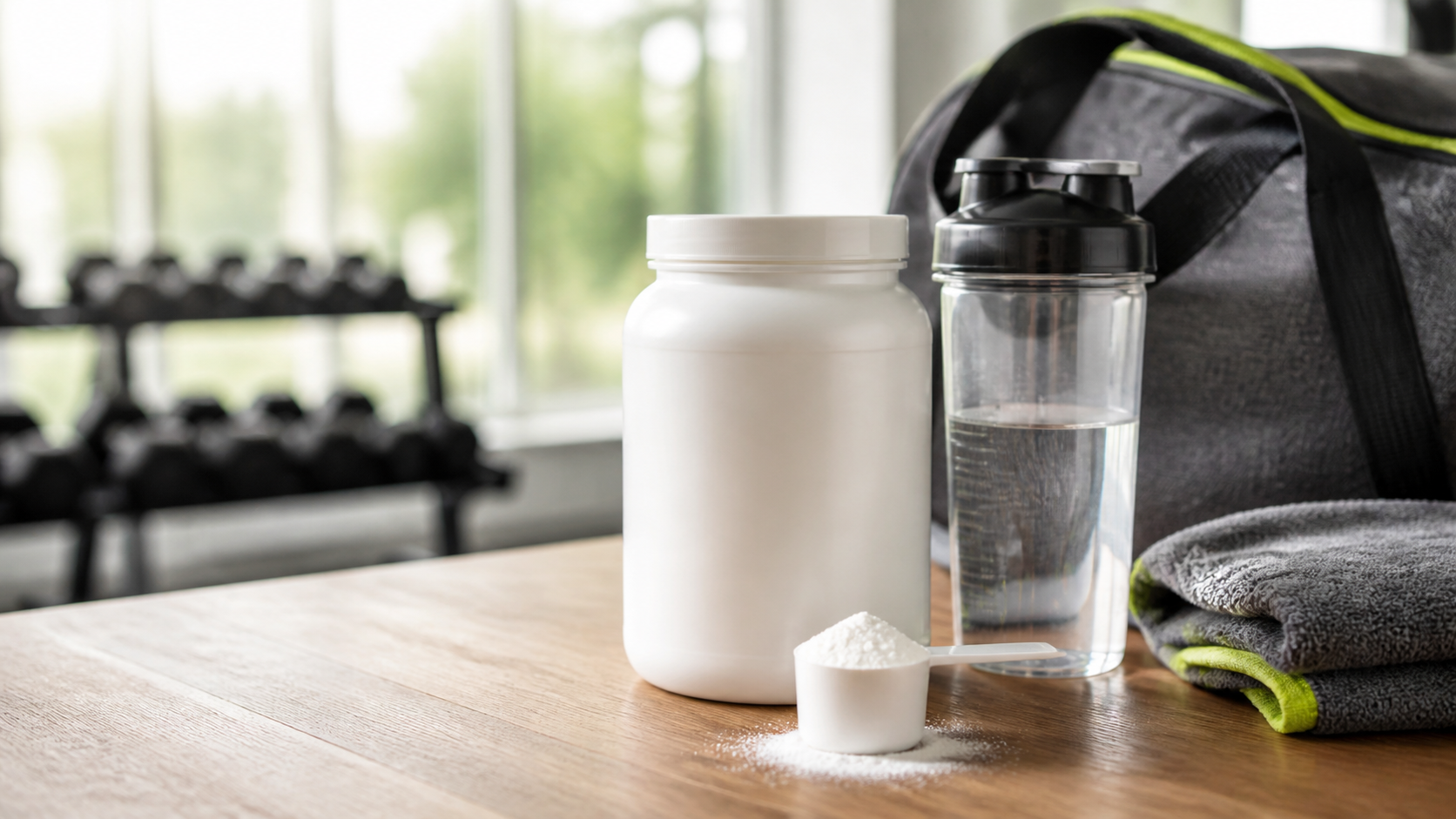

Creatine monohydrate is the rare gym supplement with a résumé longer than its marketing slogan. It is widely studied, relatively inexpensive, and useful for repeated high-intensity efforts such as lifting and sprinting. It is not a steroid, it does not replace protein, and it will not perform your final set while you supervise from the smoothie bar.
This beginner guide explains what creatine does, who may benefit, how much people commonly take in studies, and what to look for on a label. It provides general education, not personalized medical advice.
Quick answer: Creatine monohydrate is the most studied form. A simple approach used in research is 3 to 5 grams daily, without a loading phase. Consistency matters more than perfect timing. Healthy adults generally tolerate typical amounts, but people with kidney disease, pregnancy, medication concerns, or medical conditions should ask a qualified clinician first.
What is creatine?
Creatine is a compound your body makes from amino acids and stores mainly in skeletal muscle as creatine and phosphocreatine. Food—especially meat and fish—also supplies it. During short, intense efforts, phosphocreatine helps regenerate adenosine triphosphate, or ATP, which muscles use for immediate energy.
Supplementation can increase muscle creatine stores. That can improve the capacity to repeat brief, hard efforts and may help you complete slightly more high-quality training over time. The training still creates the adaptation. Creatine is support crew, not the lead actor.
Evidence-based benefits
- Strength and power: Numerous trials report benefits for maximal or repeated high-intensity muscle contractions.
- Training capacity: Some users can perform more repetitions or maintain output across repeated sets.
- Lean-mass support: When combined with resistance training, creatine may support greater gains in lean mass. Early scale changes also include water stored in muscle.
- Sprint and intermittent activity: Sports involving repeated short bursts may benefit more than steady endurance events.
The National Institutes of Health Office of Dietary Supplements notes that creatine appears most useful for repeated intense, intermittent efforts and has little value for purely endurance activities. Responses vary. Diet, baseline muscle stores, training, and individual physiology all influence results.
Why monohydrate is the default choice
Creatine monohydrate is the most widely used and studied form. More expensive versions—buffered creatine, creatine ethyl ester, creatine hydrochloride, and creatively named blends—have not consistently proved superior for increasing muscle stores, performance, stability, or safety.
“Advanced matrix” may sound exciting, but plain monohydrate has the evidence and usually the better price. Save the fireworks for your personal record.
How much creatine should beginners take?
| Method | Common research protocol | Advantages | Tradeoffs |
|---|---|---|---|
| Simple daily dose | 3–5 g daily | Easy, inexpensive, usually comfortable | Takes several weeks to saturate stores |
| Loading phase | 20 g daily split into four 5 g servings for 5–7 days, then 3–5 g daily | Raises stores faster | More GI discomfort and faster scale-weight change for some people |
A loading phase is optional. Taking 3 to 5 grams daily is simpler and can eventually produce similar saturation. Do not “dry scoop” powder. Mix it with enough liquid to drink comfortably and follow the product label.
When should you take creatine?
The best time is the time you will remember every day. Research has not established a universally superior minute. Add it to breakfast, a post-workout shake, or another consistent meal. Taking it with food may feel easier on the stomach.
Creatine does not work like caffeine; you do not need to feel an immediate surge. Its effect depends on maintaining muscle stores over time. Missing one serving is not an emergency. Resume your normal amount rather than doubling it.
Creatine powder, capsules, or gummies?
Powder is usually the least expensive per serving and makes a 3- to 5-gram daily dose easy. Capsules are portable but may require several pills. Gummies are convenient and taste-friendly, but serving size, cost, added sugar, and product stability deserve attention.
Our detailed creatine gummies versus powder comparison breaks down price, convenience, dosing, and label checks. Whatever the format, verify that the listed daily serving actually provides the intended amount of creatine.
Side effects and safety
The most predictable effect is an increase in body weight, partly because creatine draws water into muscle. The NIH reports that typical supplementation can produce roughly 1 to 2 kilograms of total body-weight gain in a month in some studies. That is not the same as gaining body fat.
Some users report stomach discomfort, nausea, diarrhea, stiffness, or cramps. Large single servings may be harder to tolerate, which is another reason to skip loading or split doses if needed. Stay normally hydrated; there is no requirement to perform a competitive water-drinking challenge.
Research generally supports creatine’s safety for healthy adults at typical amounts, including evidence from longer-term use. However, supplement quality varies and personal medical context matters. Ask a clinician before use if you have known kidney or liver disease, are pregnant or breastfeeding, take medications that affect kidney function or hydration, are under 18, or have been told to limit supplements.
Does creatine damage the kidneys?
Studies in healthy adults have not shown consistent kidney damage from recommended creatine use. Creatine can raise blood creatinine, a marker used in some kidney tests, because creatinine is a breakdown product. That does not automatically mean kidney injury, but it can complicate interpretation. Tell your healthcare professional that you take creatine before laboratory testing.
Does creatine cause hair loss?
No clinical trial has demonstrated that creatine causes hair loss. The concern largely traces to a small study that measured changes in dihydrotestosterone rather than actual hair loss, and the finding has not established a cause-and-effect relationship. People with concerns should discuss them with a dermatologist or clinician rather than relying on supplement folklore.
How to choose a creatine product
- Look for creatine monohydrate as the only active ingredient if you want the simplest option.
- Check the amount per serving rather than the scoop size.
- Prefer products with independent third-party certification, especially for competitive sport.
- Compare cost per 5-gram serving.
- Avoid proprietary blends that hide individual ingredient amounts.
- Inspect allergen statements, sweeteners, and additional stimulants.
A simple beginner routine
- Choose plain creatine monohydrate from a reputable, independently tested manufacturer.
- Take 3 to 5 grams at the same convenient time each day.
- Mix powder thoroughly and drink it rather than eating it dry.
- Continue your normal balanced diet and hydration habits.
- Follow a progressive strength program, such as our 3-day beginner workout routine.
- Evaluate progress over months using training performance—not one dramatic scale reading.
Frequently asked questions
Do I need to cycle creatine?
There is no established need for healthy adults to cycle on and off. Some people stop because of cost, preference, sport requirements, or medical guidance.
Should beginners take creatine on rest days?
Yes, if they choose to supplement. Daily consistency maintains stores; the supplement is not limited to workout days.
Can women take creatine?
Creatine is not a male-only supplement. Research includes women, although some areas need more data. The same medical and product-quality considerations apply.
The bottom line
Creatine monohydrate is popular for a good reason: it is well studied, affordable, and potentially useful for strength and repeated high-intensity exercise. Use a simple daily dose, choose a transparent product, train consistently, and keep expectations realistic. The tub assists the program; it is not the program.
Source: NIH Office of Dietary Supplements: Exercise and Athletic Performance.
Leave a Reply