
Your gym bag is packed, your headphones are charged, and breakfast is staring back at you. Is oatmeal a smart choice before training—or will that comforting bowl feel considerably less comforting halfway through your workout?
Oatmeal can make a practical pre-workout meal when the portion, toppings, and timing suit you. It provides carbohydrates, is easy to customize, and doesn’t require buying a supplement with a name that sounds like a spaceship.
It isn’t the perfect choice for every situation, though. A leisurely breakfast before an afternoon lifting session is different from eating five minutes before sprint intervals.
This guide explains how to fit oatmeal into your routine, compare different oat options, and build a bowl that supports your workout without making digestion the main event.
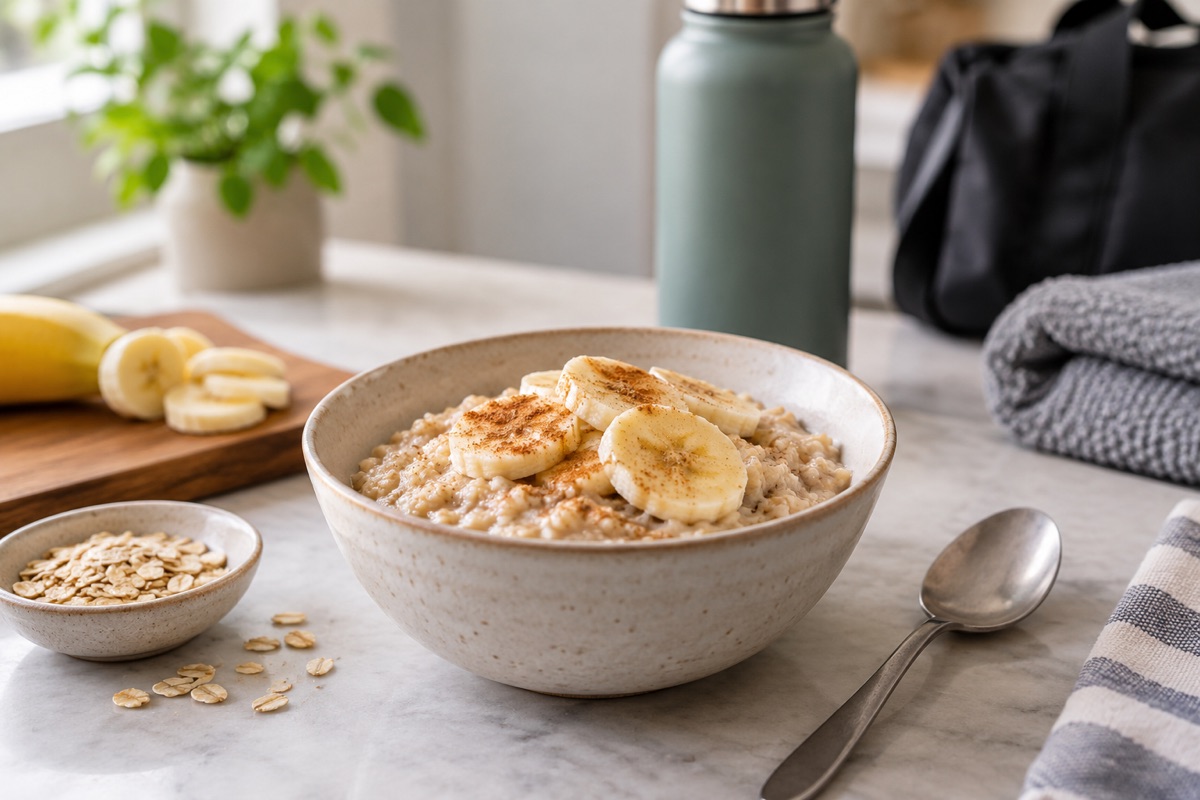
Is oatmeal good before a workout?
Yes—if you enjoy it and tolerate it comfortably.
The Academy of Nutrition and Dietetics includes oatmeal with low-fat milk and fruit among its pre-workout meal examples. That makes it a reasonable option, not a requirement: you can fuel exercise with other familiar foods, too. Source: Academy of Nutrition and Dietetics.
The useful question is less “Is oatmeal the best?” and more “Does this breakfast fit today’s workout?”
Consider three things:
- How long you have before training.
- How substantial you want breakfast to be.
- Whether oatmeal usually leaves you comfortable or overly full.
A bowl that works beautifully on a relaxed Saturday might be inconvenient before a rushed weekday gym visit.
You also don’t need to turn every short workout into a fueling project. Breakfast should fit your wider eating routine, appetite, and schedule—not become another complicated task before you’ve even found your gym shoes.
How long before a workout should you eat oatmeal?
There is no universal oatmeal countdown.
Mayo Clinic’s general guidance is to allow approximately three to four hours after a large meal, or one to three hours after a smaller meal or snack, before exercising. Those are broad starting points, not guarantees about how quickly a particular bowl will digest. Source: Mayo Clinic.
Use the following table as a planning aid rather than a personalized nutrition prescription.
| Time available | Practical approach | What to consider |
|---|---|---|
| Several hours | Eat oatmeal as part of your usual breakfast | Include toppings you already know you tolerate |
| Around one to two hours | Consider a smaller, simpler bowl | Avoid making several unfamiliar additions |
| Less than an hour | Choose according to your established tolerance | A different, familiar snack may be easier |
| Just before training | Don’t force a full bowl | Save breakfast for a more comfortable time |
These windows overlap because people and meals differ. A small bowl with water is not the same eating experience as a large jar containing oats, yogurt, seeds, nut butter, and fruit.
What if you train immediately after waking?
Make the morning easier by planning the night before.
You might prepare breakfast to eat after training, wake earlier when practical, or choose a small familiar snack before leaving. There is no prize for squeezing an enormous breakfast into a ten-minute window.
If oatmeal repeatedly feels uncomfortable at that time, choose something else. Your breakfast doesn’t need brand loyalty.
How much oatmeal should you eat before the gym?
Start with a portion you already find comfortable at breakfast. Then adjust it to your schedule and appetite.
Avoid assuming that a standard package serving is a sports nutrition target. The serving size helps you understand the label; it does not tell every reader how much to eat before every workout.
A particularly useful habit is measuring oats before cooking.
Dry oats and cooked oatmeal are not interchangeable measurements
Half a cup of dry oats and half a cup of prepared oatmeal contain different amounts of oats. Water changes the finished bowl’s weight and volume.
For a concrete label example, a Quaker Old Fashioned Oats nutrition panel lists ½ cup dry oats, or 40 grams, as 150 calories and 27 grams of carbohydrate. Check your own package because products and labels can change. Source: Quaker nutrition label.
Using that label, the following are simple scaled calculations—not prescribed portions:
| Dry oats before cooking | Calculated calories | Calculated carbohydrate |
|---|---|---|
| 20 grams | 75 | 13.5 grams |
| 30 grams | Approximately 113 | Approximately 20 grams |
| 40 grams | 150 | 27 grams |
These figures cover the oats only. Milk, fruit, yogurt, sweeteners, and other additions change the finished meal.
If you want to repeat a breakfast that worked well, record the dry oat amount and toppings. “One bowl” is surprisingly difficult to reproduce when the household owns five different bowl sizes.
Rolled oats, quick oats, or steel-cut oats?
Choose the version that fits your preparation time and preferences. No type earns an automatic “best pre-workout” trophy.
| Oat option | Main practical advantage | What to check |
|---|---|---|
| Rolled oats | Versatile for cooked oatmeal or overnight preparation | Portion and preparation instructions |
| Quick oats | Convenient when you want a fast breakfast | Whether the product is plain or flavored |
| Instant oatmeal packets | Portable and individually portioned | Packet size, ingredients, and nutrition label |
| Steel-cut oats | Appealing if you enjoy a chewier texture | Cooking time and whether you like them before exercise |
| Overnight oats | Breakfast can be prepared ahead | The complete recipe, not just the oats |
Are instant oats bad before a workout?
“Instant” does not tell you everything about a product.
Compare the actual ingredients, serving size, and nutrition information. A plain product and a flavored packet may be quite different, even though both are quick to prepare.
There is also no need to assume every instant oatmeal will cause an energy crash. Your experience depends on the meal and your circumstances, not a single word on the packaging.
Are overnight oats better?
Their clearest advantage is convenience.
Preparing breakfast ahead removes a morning decision. But overnight oats can be a modest serving or a very substantial meal depending on what goes into the jar.
Soaking oats does not make every recipe suitable immediately before training.
What should you add to pre-workout oatmeal?
Begin with flavor and familiarity. You do not need twelve toppings to make breakfast worthwhile.
USADA notes that large amounts of fat, fiber, or protein close to exercise can contribute to digestive discomfort for some athletes. That does not make these nutrients unhealthy; it makes the timing and size of the meal relevant. Source: USADA.
A useful editing exercise is to look at your normal bowl and ask: Which additions do I actually enjoy, and which am I adding because the internet said breakfast needed more ingredients?
Fruit
Banana slices, berries, or another familiar fruit can add variety. Choose according to taste, availability, and what usually agrees with you.
Milk or yogurt
Use a product you tolerate and enjoy. If ordinary milk regularly causes symptoms, don’t use a workout morning to pretend that relationship has improved.
Nut butter, nuts, and seeds
These can belong in a balanced breakfast. The practical question is how much you want in this particular meal, at this particular time.
Protein powder
Protein powder is optional, not an oatmeal admission requirement. If you use it, follow the product’s serving guidance and count it as part of the complete recipe.
For help comparing labels, see GymTopper’s protein powder guide for beginners.
Three easy oatmeal ideas to adapt
These are preparation ideas, not individualized meal plans. Adjust the quantities to your appetite, dietary needs, and experience.
1. Simple banana oatmeal
Ingredients
- Your usual comfortable portion of plain oats.
- Water or a familiar milk.
- Sliced banana.
- Cinnamon, if you enjoy it.
Method: Cook the oats according to the package instructions. Add banana and cinnamon after cooking.
This is a useful starting recipe because it is easy to repeat. If you later change the portion or timing, you will have fewer ingredients to keep track of.
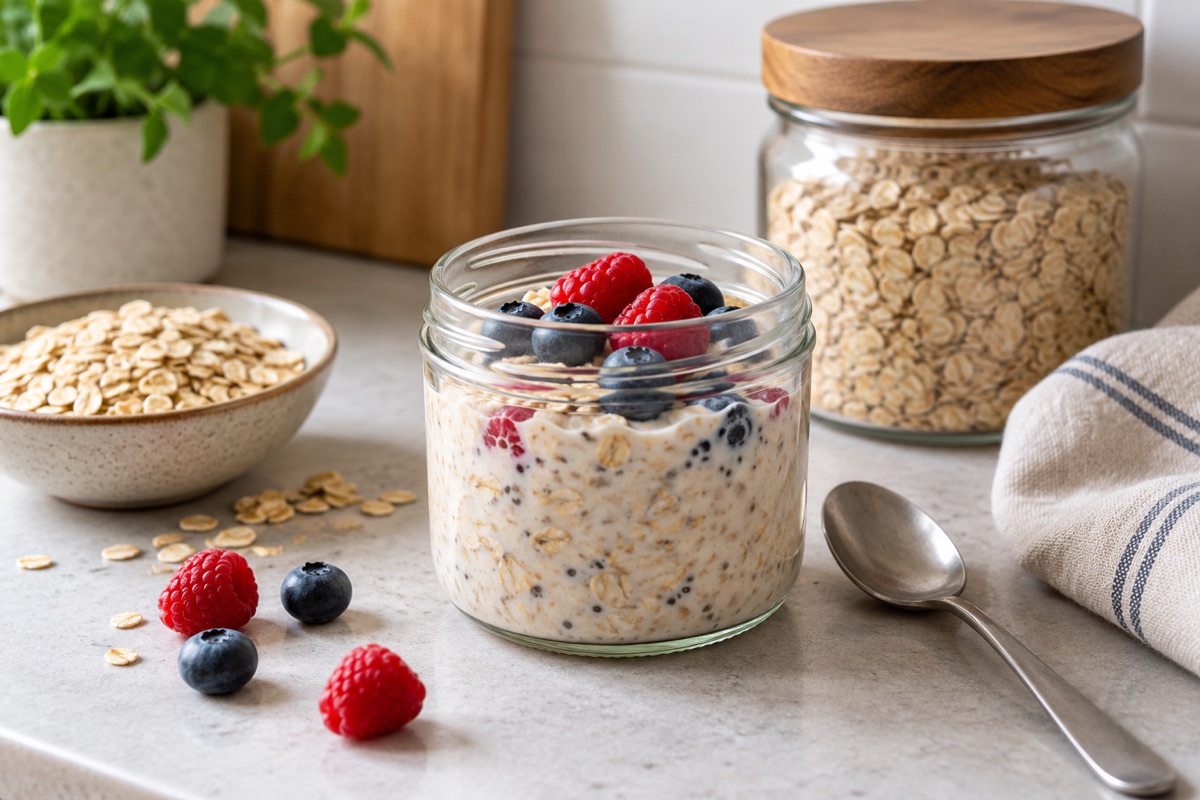
2. Make-ahead berry oats
Ingredients
- Rolled oats.
- A suitable amount of your preferred milk.
- A small serving of berries.
- Yogurt, if desired and tolerated.
Method: Combine the ingredients in a covered container and refrigerate overnight, following appropriate food-storage guidance and the ingredients’ package instructions.
Keep the first version straightforward. You can experiment with extras on another day rather than discovering that your breakfast jar has become a surprisingly ambitious dessert.
3. Plain oats with a separate side
Prepare oats simply, then serve any yogurt, fruit, or other breakfast food separately.
This approach makes it easier to adjust the meal without remaking everything. You can eat the amount you want and keep the components distinct.
It is also helpful if you dislike the texture of protein powder mixed into hot oatmeal. Breakfast should not require negotiating with a bowl of paste.
Match breakfast to your actual workout
A useful plan starts with the session you intend to do, not the most demanding workout you can imagine.
Before a beginner strength session
Pick a breakfast routine you can repeat on training days. Consistency makes it easier to notice whether the portion and timing suit you.
If you are still building your training routine, use GymTopper’s three-day gym workout plan for beginners alongside a simple meal schedule.
Before cardio
Note the kind of cardio, not just the word “cardio.”
A comfortable walk, a steady cycling session, and a hard interval workout are different experiences. Record what you actually did when judging whether breakfast worked.
For an introduction to easier aerobic training, explore the Zone 2 cardio beginner guide.
Before a new or especially important session
Keep breakfast familiar.
Trying a new workout and a completely new meal together makes it harder to identify what caused a problem—or what worked well.
Common oatmeal mistakes worth avoiding
Changing everything at once
If you double the oats, add a new powder, switch milk, and eat later than usual, a disappointing workout won’t tell you much about which change mattered.
Forgetting the toppings
When comparing two breakfasts, write down the complete meal. The oats may be identical while everything around them changes.
Treating fullness as a challenge
You don’t need to finish a portion simply because a recipe serves one. Recipe portions are not personalized instructions.
Chasing a perfect breakfast
No oatmeal recipe can guarantee a personal best. A meal can fit your routine without being “optimal” in every theoretical way.
Ignoring recurring symptoms
Repeated pain, significant bloating, nausea, or other persistent digestive symptoms deserve attention. Don’t keep repeating an uncomfortable routine solely because it is popular online.
A simple way to find your best routine
Use a short breakfast-and-training log on ordinary workout days.
Record:
- The dry oat amount and toppings.
- When you finished eating.
- When training started.
- The workout you completed.
- Hunger, fullness, and comfort.
Then change one variable if needed.
For example, if the meal felt too substantial, you might try a smaller serving while keeping the recipe and timing similar. If mornings are rushed, you might change the preparation method instead.
These notes are for spotting patterns, not diagnosing digestive problems or proving that one breakfast caused a better workout. Sleep, hydration, stress, and the session itself can also affect how you feel.
Frequently asked questions
Can I eat oatmeal 30 minutes before a workout?
Some people tolerate a small serving, but that short window may not suit you. Don’t assume a full breakfast will be comfortable because someone else eats it before training.
Is oatmeal better before or after exercise?
Either can fit your day. Choose according to your schedule, preferences, and the rest of your meals. Oatmeal does not become useful only on one side of a workout.
Should I buy a special fitness oatmeal?
You don’t need a fitness-branded product to try this meal. Compare ordinary products by ingredients, portion size, convenience, and price.
What if I have a medical dietary restriction?
Follow advice specific to your condition. For example, people managing blood glucose or medically required gluten avoidance should not treat a general gym breakfast article as individualized guidance.
The bottom line
Oatmeal before a workout can be a convenient breakfast choice, especially when you already enjoy it.
Start with a familiar portion, allow a comfortable eating window, and keep the recipe simple enough to repeat. Measure dry oats if you want useful comparisons, count the toppings, and adjust based on your own experience.
The goal is to arrive at the gym ready to train—not still thinking about breakfast.
Editorial note: This is a research-informed guide, not a report of firsthand meal testing or individualized nutrition advice.
Leave a Reply