
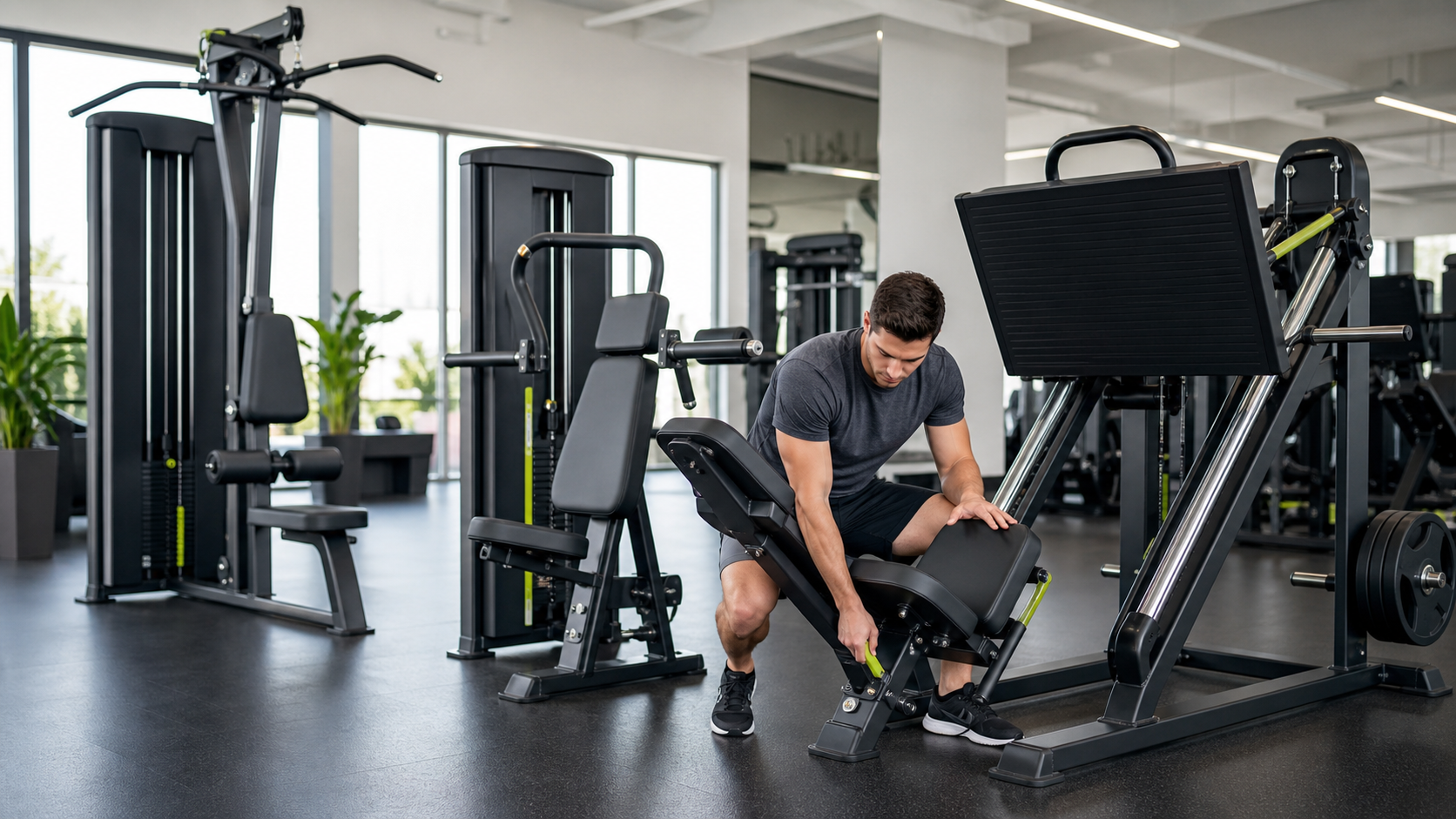
Gym machines can be a great starting point for beginners. They guide the movement path, make setup more predictable, and help you focus on learning how your muscles should work. The best gym machines for beginners are not necessarily the fanciest ones—they are the machines you can adjust, control, and use consistently with good form.
Why beginners can start with machines
Free weights are useful, but they require more balance and coordination. Machines reduce some of that complexity while you learn basic pushing, pulling, squatting, and hip-hinging patterns. That does not make machines “easy” or ineffective. When the seat, handles, and weight are adjusted correctly, machine training can build strength and confidence.
1. Leg press machine
The leg press is a beginner-friendly lower-body machine because it trains your thighs and glutes while your back is supported. Sit with your hips and lower back against the pad. Place your feet about shoulder-width apart on the platform. Lower the platform under control, then press through your whole foot. Do not lock your knees at the top, and avoid lowering so far that your hips curl away from the pad.
2. Seated chest press machine
The seated chest press helps you practice a horizontal pushing pattern for your chest, shoulders, and triceps. Adjust the seat so the handles begin around the middle of your chest. Keep your feet grounded, shoulders relaxed, and wrists straight. Press forward smoothly, pause briefly, and return slowly. If your shoulders feel pinched, reduce the weight or ask a staff member to check the setup.
3. Lat pulldown machine
The lat pulldown trains your back and arms with a vertical pulling pattern. Secure the thigh pad, take a comfortable grip, and pull the bar toward the upper chest without leaning far backward. Think about drawing your elbows down toward your sides. Control the bar on the way up instead of allowing the stack to pull your shoulders forward.
4. Seated row machine
A seated row balances pressing exercises by training the muscles of your upper back. Sit tall and keep your chest comfortably lifted. Pull the handle toward your lower ribs, pause as your shoulder blades come together, and return with control. Avoid rounding your lower back or jerking the handle with momentum.
5. Seated shoulder press machine
The shoulder press develops your shoulders and triceps in a supported position. Adjust the seat so the handles start near ear level, not behind your head. Keep your ribs from flaring as you press upward. Use a light load at first; shoulder comfort matters more than the number on the weight stack.
6. Leg curl machine
Leg curls train the hamstrings, the muscles on the back of your thighs. Whether your gym has a seated or lying version, align your knee with the machine’s pivot point and place the pad comfortably above your ankles. Curl under control, squeeze briefly, and return slowly. Start light because hamstrings can fatigue quickly.
7. Cable machine
A cable station is not one single machine, but it is one of the most useful tools in a gym. You can perform rows, chest presses, face pulls, triceps pressdowns, and biceps curls by changing the handle and pulley height. Begin with simple cable rows or triceps pressdowns, and ask staff how to attach handles safely before using a new setup.
How to set up a machine correctly
- Read the instruction placard on the machine before your first set.
- Adjust the seat, pad, and range of motion so joints line up naturally with the machine’s pivot point.
- Start with the lightest practical weight and perform a few slow practice repetitions.
- Choose a load you can control for 8 to 12 repetitions with steady breathing.
- Return the pin securely and never let the weight stack crash down.
A simple beginner machine workout
After a short warm-up, choose four to six machines from this list. Perform one or two sets of 8 to 12 repetitions on each, resting one to two minutes between sets. Train two or three nonconsecutive days per week. As the workout becomes easier, add a small amount of weight, one repetition, or one additional set—not all three at once.
Common beginner machine mistakes
- Using a weight that forces you to rush or shorten the movement.
- Skipping machine adjustments and training in an awkward position.
- Holding your breath for an entire set.
- Copying another person’s settings without considering your height and comfort.
- Ignoring sharp pain. Stop the exercise and seek qualified guidance if something does not feel right.
Build from machines to a complete routine
Machines are a useful foundation, not a limitation. Once you are comfortable, you can gradually add bodyweight movements, dumbbells, or barbells. For now, focus on arriving consistently and improving one small detail each session. Visit the Beginner Gym Hub and follow our simple three-day beginner gym plan when you are ready for a full schedule.
Machine setup: three checks before the first rep
A machine is beginner-friendly only after it fits your body and lets you control the movement.
Match the machine pivot with the joint that is moving when possible.
Keep the intended support pads in comfortable contact.
Use a light load and stop if the path feels forced or painful.
Continue with a beginner-friendly next step
- Use the first-day gym checklist
- Choose the right starting resistance
- Put the machines into a 3-day plan
How this was prepared: GymTopper created this practical decision guide for beginner use and checked the general recommendations against CDC muscle-strengthening guidance. Read our editorial policy. General education only; adjust training to your ability and seek qualified guidance when needed.
Leave a Reply