
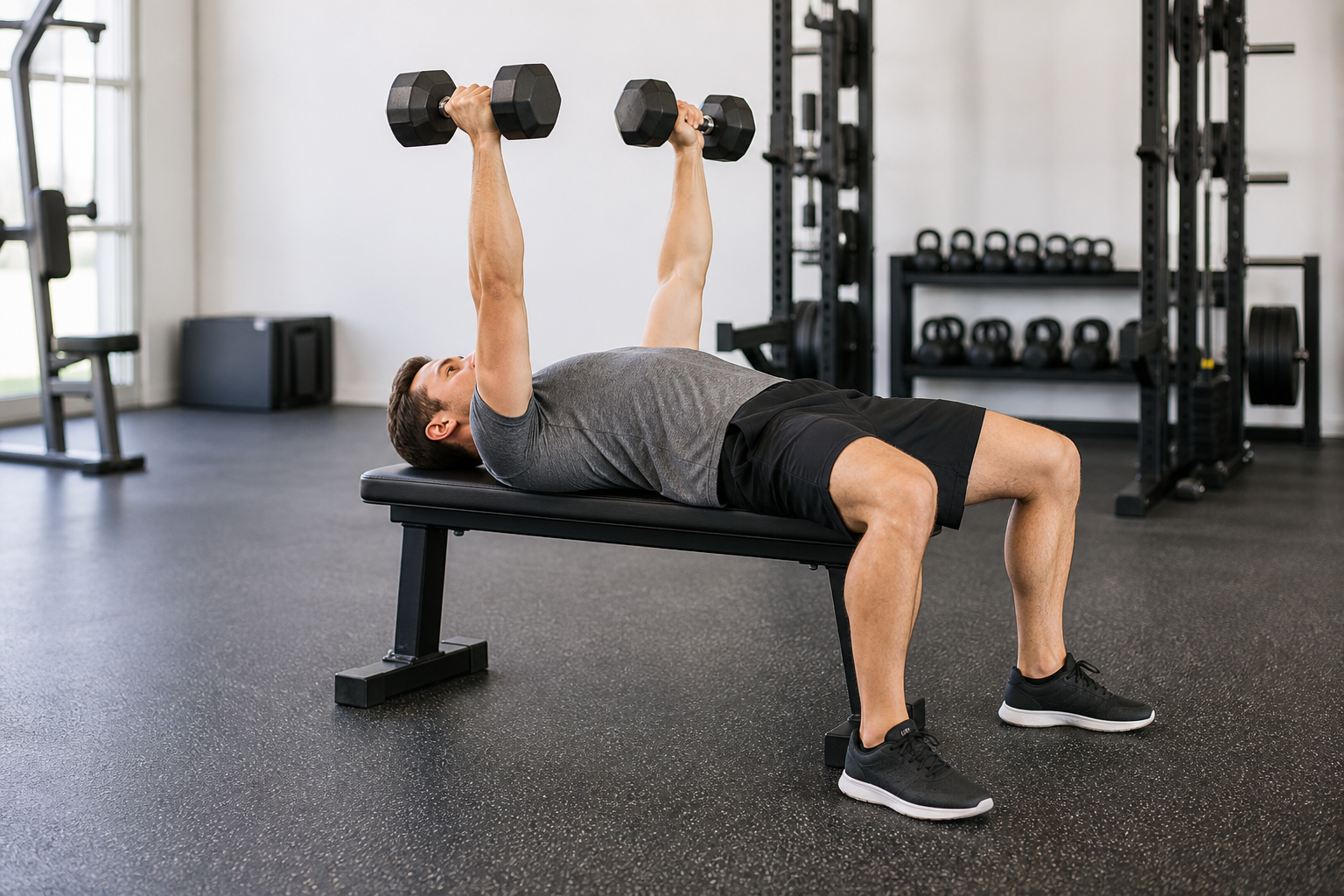
Learning how to choose the right starting weight at the gym can make your first weeks far less intimidating. The best starting weight is not the heaviest number you can move once. It is a load that lets you practice the exercise with control, complete a useful number of repetitions, and finish with a few good reps still available.
When in doubt, start lighter. The first set is an experiment, not a test of strength.
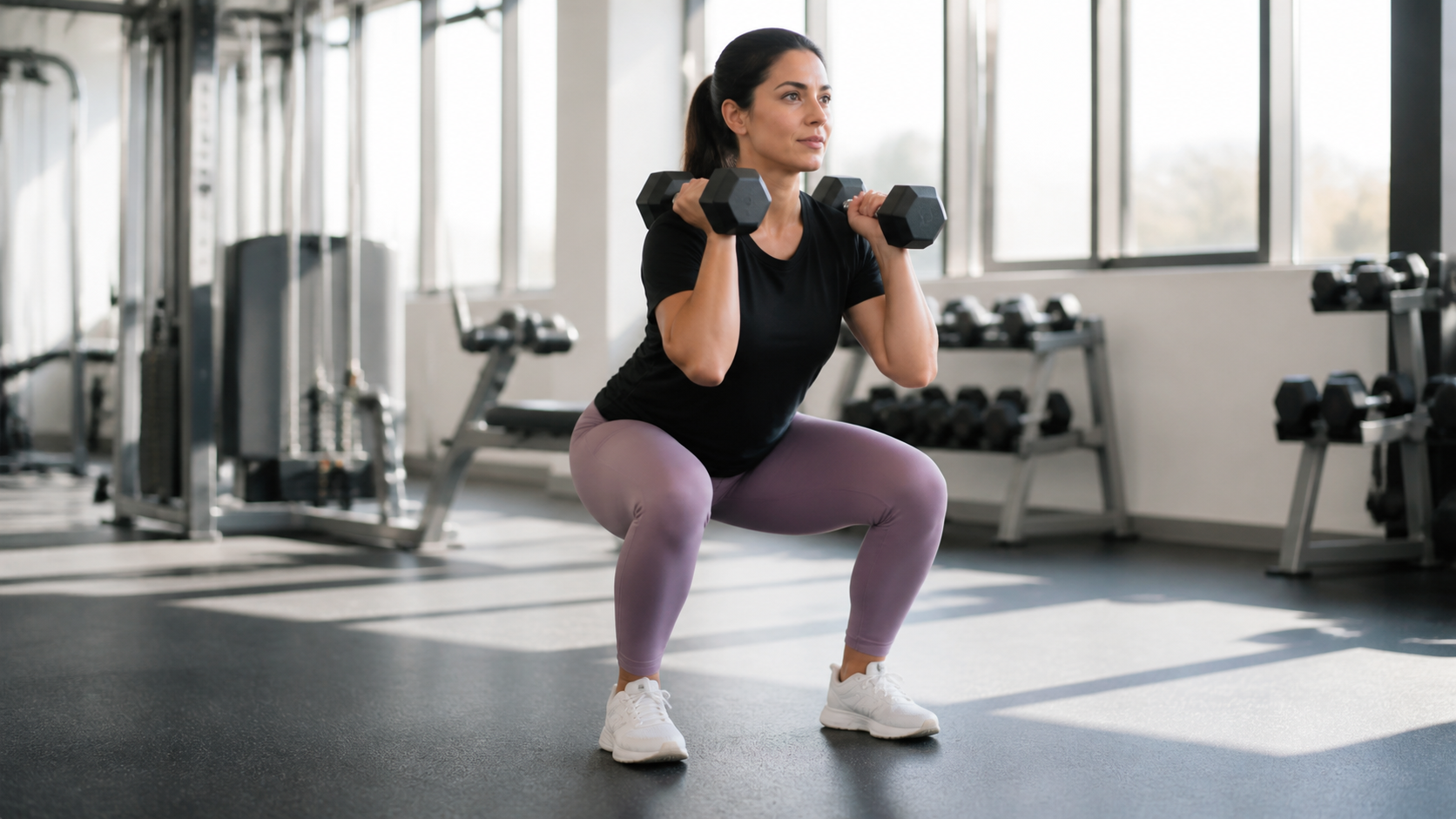
The five-step starting-weight test
- Learn the setup. Adjust the seat, handles, supports, and safety stops before adding a challenging load.
- Choose a very light first weight. Use an empty machine setting, the lightest pin, body weight, or a light pair of dumbbells.
- Perform 8–10 controlled repetitions. Use a comfortable range and avoid bouncing or rushing.
- Evaluate the set. Ask whether you could have completed at least three or four more repetitions with the same technique.
- Adjust once. Add a small amount if it was extremely easy, or reduce the load if control changed. Repeat before choosing the working weight.
This process may take a few extra minutes on the first visit. Record the result so you do not need to start from zero next time.
Use technique as the first test
A weight is too heavy for a beginner set when it changes the exercise before the target repetitions are complete. Common signs include:
- Rushing or dropping the lowering phase
- Twisting, bouncing, or shifting position to finish
- Losing a stable grip or foot position
- Shortening the range more with every repetition
- Holding your breath unintentionally for a long time
- Feeling sharp or increasing pain
Normal effort and muscle fatigue are expected. Pain is not a requirement. Stop the exercise and check the setup when something feels wrong.
Start with an 8–12 repetition range
For many beginner machine and dumbbell exercises, 8–12 controlled repetitions is a convenient range. Choose a load that lets you stay within that range while finishing with about two or three good repetitions in reserve. You should need to concentrate near the end, but you should not need to grind, bounce, or sacrifice posture.
Some exercises work well with different ranges. Calf raises and smaller isolation exercises may feel comfortable at 10–15 repetitions. A balance-focused exercise may use fewer repetitions per side. The exact number matters less than consistent technique and gradual progression.
Examples on common gym equipment
Selectorized machines
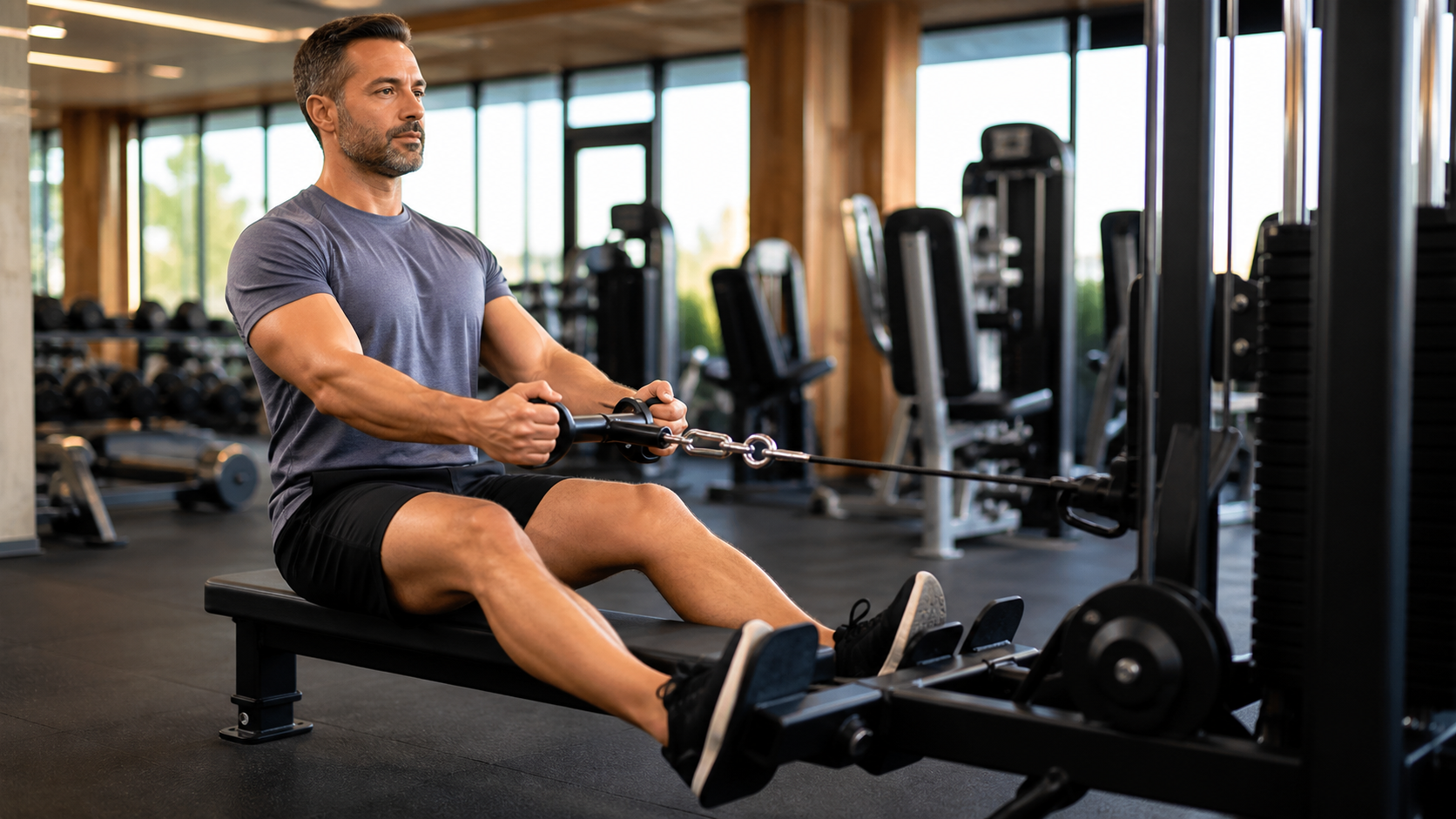
Start with a light pin setting. Adjust the seat so the machine’s pivot and handles match your body as closely as practical. Complete a test set, then move the pin by one small increment if the movement feels very easy.
Dumbbells
Choose a pair you can lift into the starting position safely. Dumbbell jumps can be large, so increasing repetitions at the same weight may be more sensible than moving immediately to the next pair.
Barbells
The standard bar can already be a meaningful load. Learn the movement with a training bar, a lighter fixed bar, dumbbells, or body weight when available. Ask a qualified trainer to explain rack height, safety arms, collars, and spotting before training near your limit.
Bodyweight exercises
Your body is the resistance. Change the leverage or support instead of adding weight: use a higher surface for push-ups, a bench for sit-to-stands, or a rail for supported split squats.
A simple progression rule
Keep the same load until you can reach the top of your repetition range on every planned set with controlled form. Then increase by the smallest practical amount and return to the lower end of the range.
For example, suppose you perform two sets of seated rows with a target of 8–12 repetitions:
- Session 1: 10 and 9 reps—keep the weight.
- Session 2: 11 and 10 reps—keep the weight.
- Session 3: 12 and 12 reps with good control—add the smallest amount next time.
- Session 4: 9 and 8 reps at the new weight—build from there.
Progress will not be perfectly linear. Repeat a weight, use fewer repetitions, or reduce the load when sleep, stress, or recovery is different.
What to record
Use a notebook or notes app and record:
- Exercise name
- Machine brand or location when similar machines differ
- Seat and pad settings
- Weight
- Repetitions for each set
- A short note such as “easy,” “about right,” or “form changed”
Machine numbers are not standardized between gyms or manufacturers. Compare the same equipment with your own previous workout rather than comparing numbers with another person.
Frequently asked questions
Should the last repetition be very difficult?
It should require attention, but beginners do not need to reach total exhaustion. Finishing with two or three controlled repetitions still available provides useful practice and makes recovery easier to manage.
What if the smallest weight is still too heavy?
Use a different machine, a resistance band, body weight, or an easier version of the movement. Gym staff may be able to suggest equipment with smaller increments.
What if the next dumbbell jump is too large?
Stay with the current weight and add repetitions within your planned range, slow the lowering phase slightly, or add another set only when it fits your program. You do not need to force the next pair.
When should I ask for help?
Ask when you cannot identify the adjustment points, safety catches, intended movement, or a comfortable setup. Seek medical guidance for sharp, persistent, or worsening pain rather than treating weight selection as the solution.
Source and further reading
This article provides general fitness education. Start gradually, use controlled form, and seek individual guidance from a qualified professional when you have pain, an injury, a medical condition, or uncertainty about equipment.
Starting-weight decision chart
The correct starting load is a learning tool. Choose the lightest option that gives clear feedback without changing your technique.
All reps are effortless: add the smallest increment next time.
Last reps require focus while control stays consistent.
Range shortens or momentum appears: reduce the load now.
Continue with a beginner-friendly next step
How this was prepared: GymTopper created this practical decision guide for beginner use and checked the general recommendations against CDC muscle-strengthening guidance. Read our editorial policy. General education only; adjust training to your ability and seek qualified guidance when needed.
Leave a Reply