
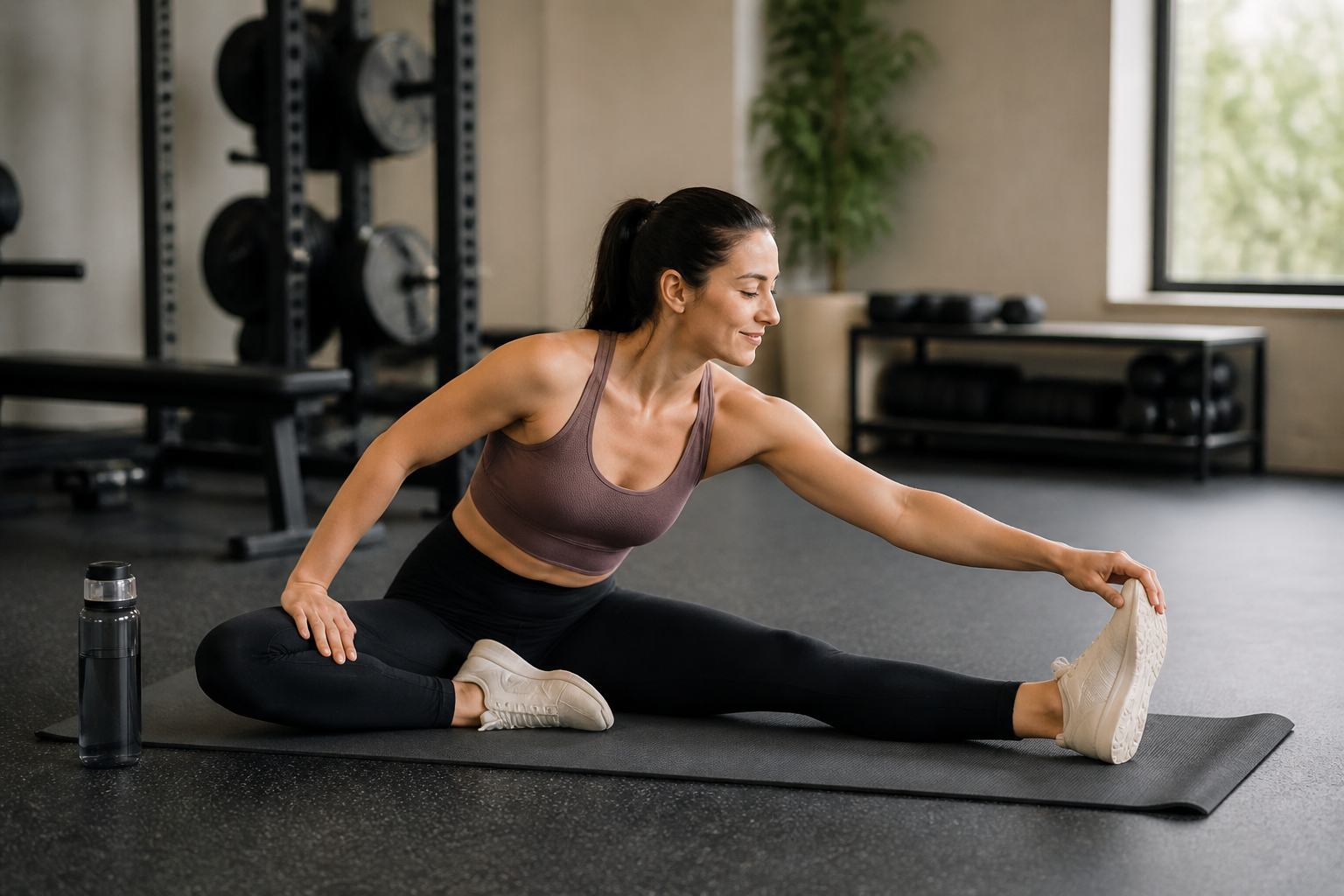
A gym warm-up routine for beginners prepares you to train with more focus and control. It does not need to be long, exhausting, or complicated. A useful warm-up gradually raises your effort, lets you check how you feel that day, and rehearses the movements you will use in the workout.
The 10-minute template below works before many beginner strength sessions. Adjust the equipment and practice movements to match your workout.
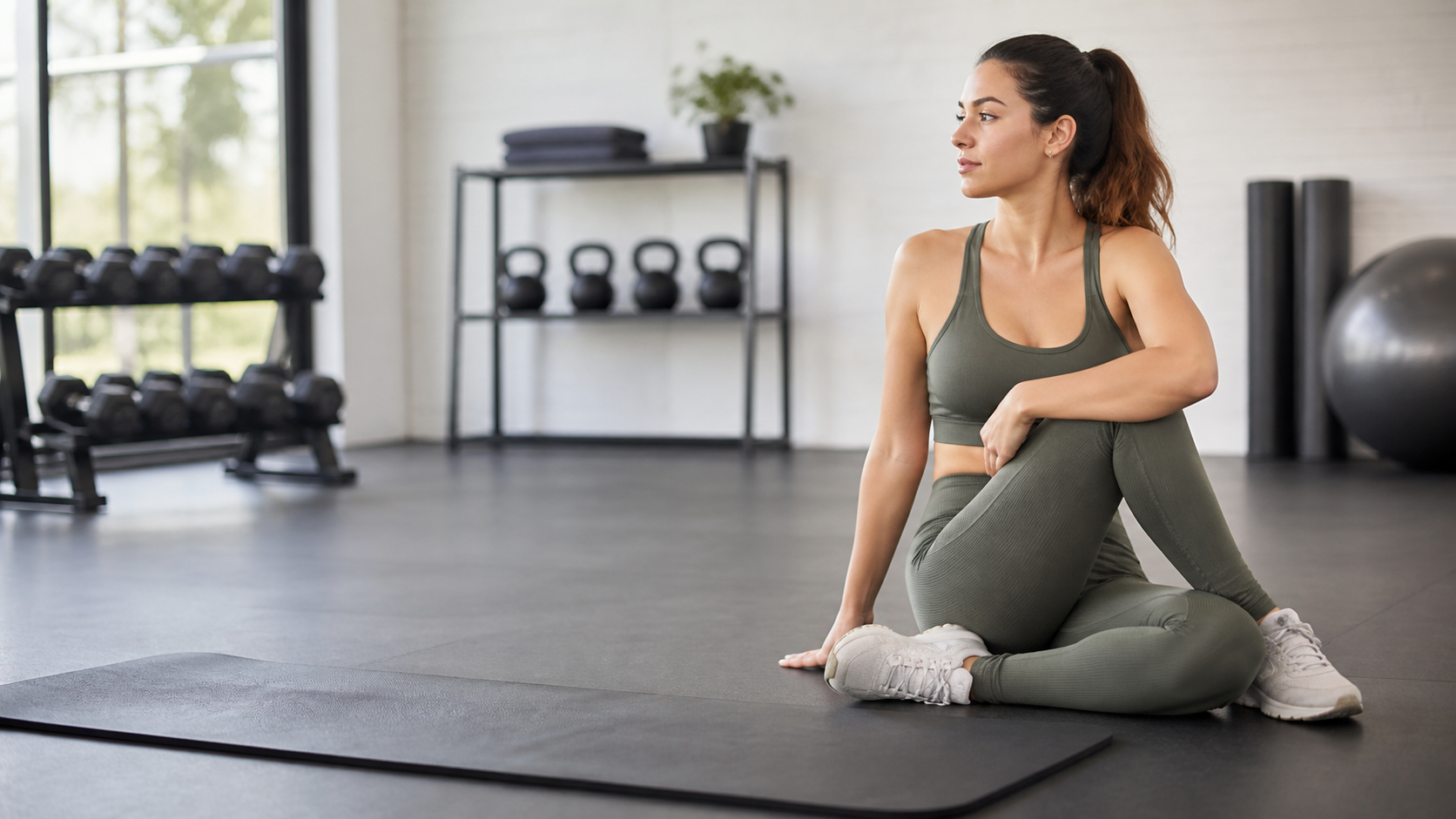
The simple 10-minute warm-up
| Time | What to do | Goal |
|---|---|---|
| Minutes 0–5 | Easy treadmill, bike, elliptical, or rower | Raise effort gradually while you can still speak comfortably |
| Minutes 5–7 | Controlled movement practice | Rehearse the joints and patterns in today’s workout |
| Minutes 7–10 | One or two lighter sets of the first exercise | Check setup, range of motion, and technique |
Step 1: Five minutes of easy cardio
Choose any familiar cardio machine. Begin slowly and increase to a pace that feels easy to moderate. You should be able to speak a short sentence. The goal is not to chase a calorie number, reach a target heart rate, or become tired before the main workout.
If you dislike cardio machines, walk around the gym or perform relaxed marching in place. The best choice is one you can start without complicated setup.
Step 2: Practice two or three movements
Use movements related to the workout instead of a random list of stretches. Complete about five controlled repetitions of each. Stay within a comfortable range.
Before a lower-body workout
- Sit-to-stand from a bench
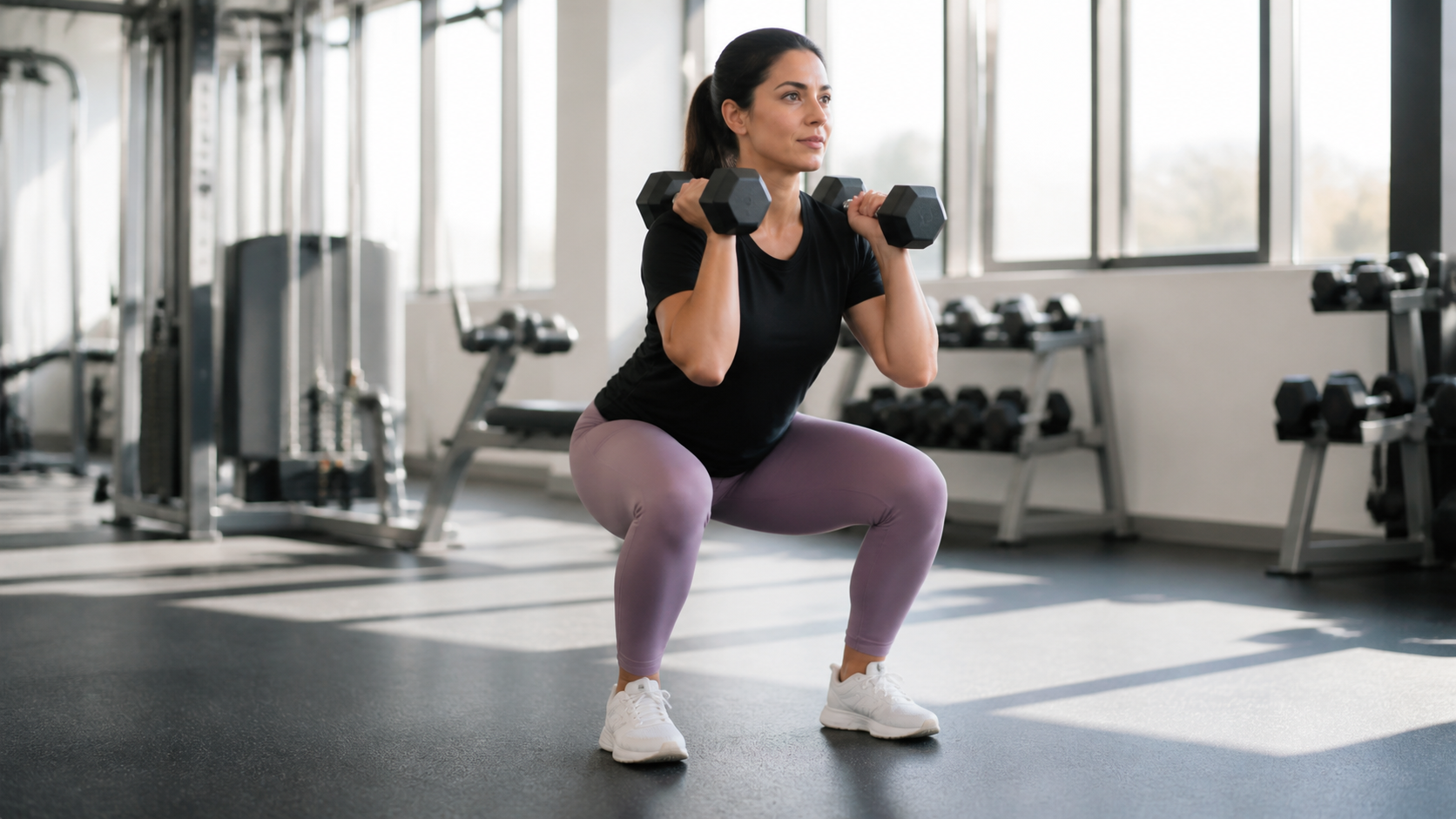
- Bodyweight squat to a comfortable depth
- Supported reverse step or split-stance knee bend
- Slow calf raise while holding a stable support
Before an upper-body workout
- Gentle shoulder circles
- Wall slides in a comfortable range
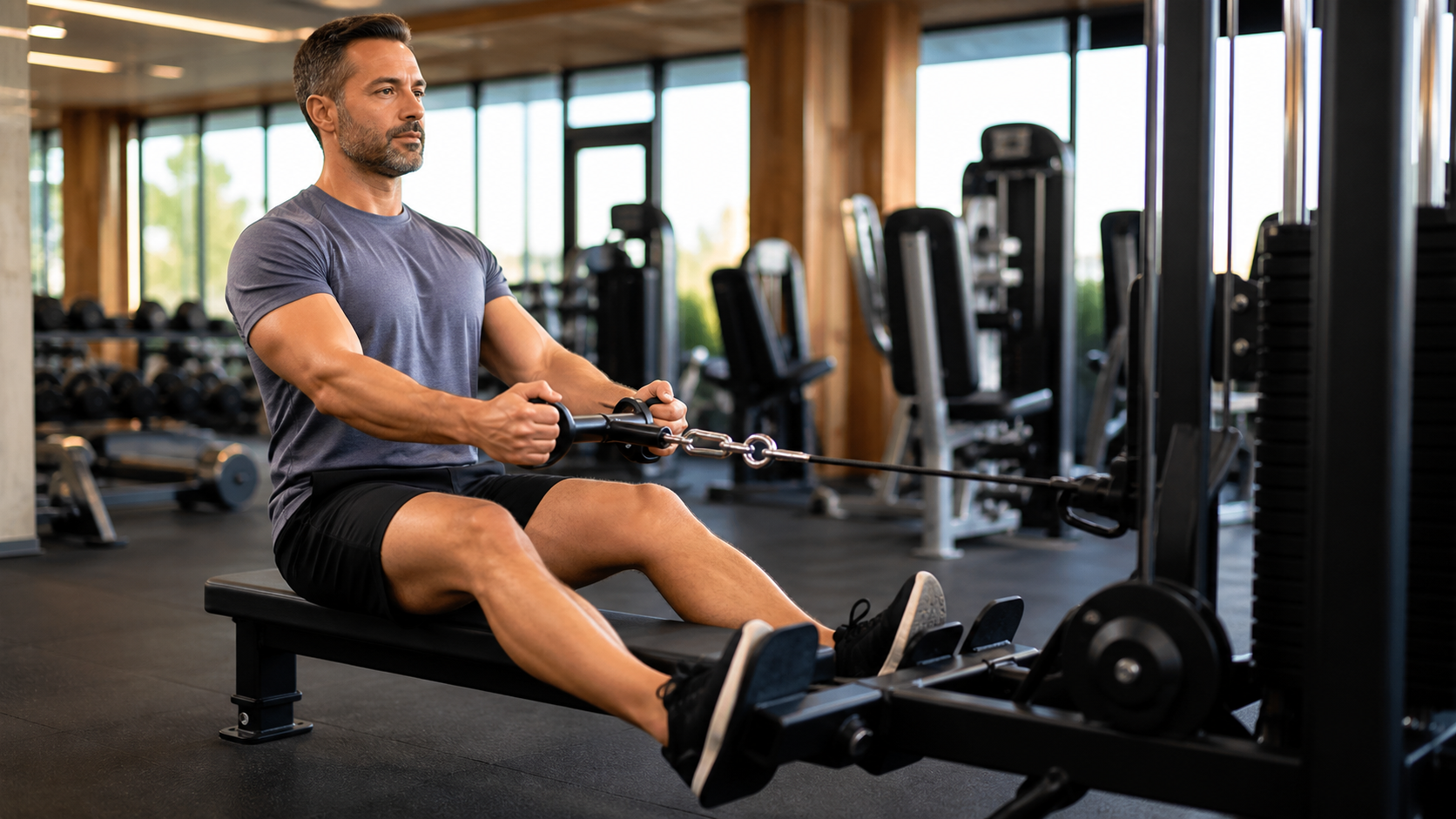
- Very light cable or band rows
- Wall push-ups or a light machine press
Do not force a joint into a deeper position simply because a stretch looks impressive. Movement should become smoother as the warm-up continues.
Step 3: Build up with lighter sets
Your first strength exercise deserves at least one light preparation set. If the working exercise is a leg press, begin with a lighter load for 8–10 smooth repetitions. Check the seat, foot position, and movement path. Add a small amount of weight for another short set if your planned working load is substantially heavier.
Lighter sets are not supposed to be difficult. Their job is to help you arrive at the working weight gradually. You may need more preparation sets as the exercise becomes heavier and more technical.
How to warm up for different workouts
Full-body strength day
Perform five minutes of easy cardio, several bodyweight squats or sit-to-stands, gentle shoulder movements, and light sets of your first leg and upper-body exercises.
Cardio day
Use the first 5–10 minutes of the cardio session as the warm-up. Begin below your planned pace and increase gradually. A separate circuit is usually unnecessary for a straightforward walk, ride, or elliptical workout.
Leg day
Choose walking or cycling, practice a squat pattern and a supported single-leg pattern, then perform light sets of the first loaded leg exercise.
Upper-body day
Choose easy cardio, gentle shoulder movement, and light pulling and pressing. Then complete preparation sets for the first major exercise.
Warm-up mistakes to avoid
- Turning it into a workout: sprints, hard circuits, and heavy sets can reduce the quality of the main session.
- Doing unrelated drills: choose movements that prepare you for today’s exercises.
- Using the same weight immediately: approach the working load gradually, especially on the first exercise.
- Forcing discomfort: a warm-up should not require pushing through sharp or increasing pain.
- Making it too elaborate: a repeatable 10-minute routine is more useful than a 30-minute sequence you avoid.
When to make the warm-up longer or shorter
On a warm day after plenty of movement, you may feel ready quickly. After a long drive, a cold commute, or a demanding previous session, you may prefer additional easy movement and lighter sets. Sleep, stress, and soreness can also change how prepared you feel.
If your planned workout is short, keep the warm-up proportional. Even five focused minutes can provide a useful transition. If you still feel unusually stiff or unwell after warming up, lower the workout difficulty or stop for the day.
Frequently asked questions
Should I stretch before lifting?
You do not need a long stretching routine before every workout. Controlled movement and lighter practice sets are specific to the task ahead. If you use static stretches because they help you reach a needed position, keep them comfortable and follow with movement practice.
Is five minutes enough?
It can be enough before a light, familiar session. The right duration depends on the workout and how you feel. Readiness is a better guide than an exact clock.
Do warm-up sets count as working sets?
Usually not. They use lighter loads and are meant to prepare you, not provide the main training challenge. Record working sets separately.
What symptoms mean I should stop?
Stop if you experience chest pain, faintness, severe shortness of breath, sudden weakness, or sharp or worsening pain. Seek appropriate medical care rather than using the warm-up to test a concerning symptom.
This article provides general fitness education. Start gradually and seek individual guidance from a qualified health or fitness professional if you have an injury, medical condition, or concern about exercise.
The warm-up readiness test
A warm-up should leave you more prepared, not pre-fatigued. Use this quick check before the first working set.
You feel slightly warmer after easy movement.
The planned motion feels comfortable and controlled.
A light practice set looks like the exercise you intend to train.
Continue with a beginner-friendly next step
How this was prepared: GymTopper created this practical decision guide for beginner use and checked the general recommendations against American Heart Association warm-up and cool-down overview. Read our editorial policy. General education only; adjust training to your ability and seek qualified guidance when needed.
Leave a Reply