
A leg day workout for beginners should teach a small number of useful movements without leaving you too sore to return. The session below trains the thighs, hips, hamstrings, and calves with common gym equipment. Start with two sets of each exercise, use controlled repetitions, and stop every set while you could still perform a few good reps.
You can perform this workout once a week as part of a broader beginner plan. If you use two full-body workouts instead, choose two or three of these exercises for each session rather than adding a separate leg day.
Beginner leg-day workout at a glance
| Exercise | Sets | Repetitions | Rest |
|---|---|---|---|
| Leg press or box squat | 2 | 8–12 | 90–120 seconds |
| Seated leg curl | 2 | 8–12 | 60–90 seconds |
| Supported split squat or low step-up | 2 | 6–10 per side | 60–90 seconds |
| Glute bridge | 2 | 10–15 | 60–90 seconds |
| Standing or seated calf raise | 2 | 10–15 | 60 seconds |
The ranges are starting points, not requirements. Use fewer exercises, lighter loads, or a smaller comfortable range of motion when you are learning.
Warm up for 5–10 minutes
Walk or cycle at an easy pace for about five minutes. Then perform several slow sit-to-stands from a bench or bodyweight squats in a comfortable range. Before the first loaded exercise, complete one or two lighter practice sets to check the setup and movement.
The warm-up should make you feel more prepared, not tired. Save hard intervals and long circuits for a different part of your program.
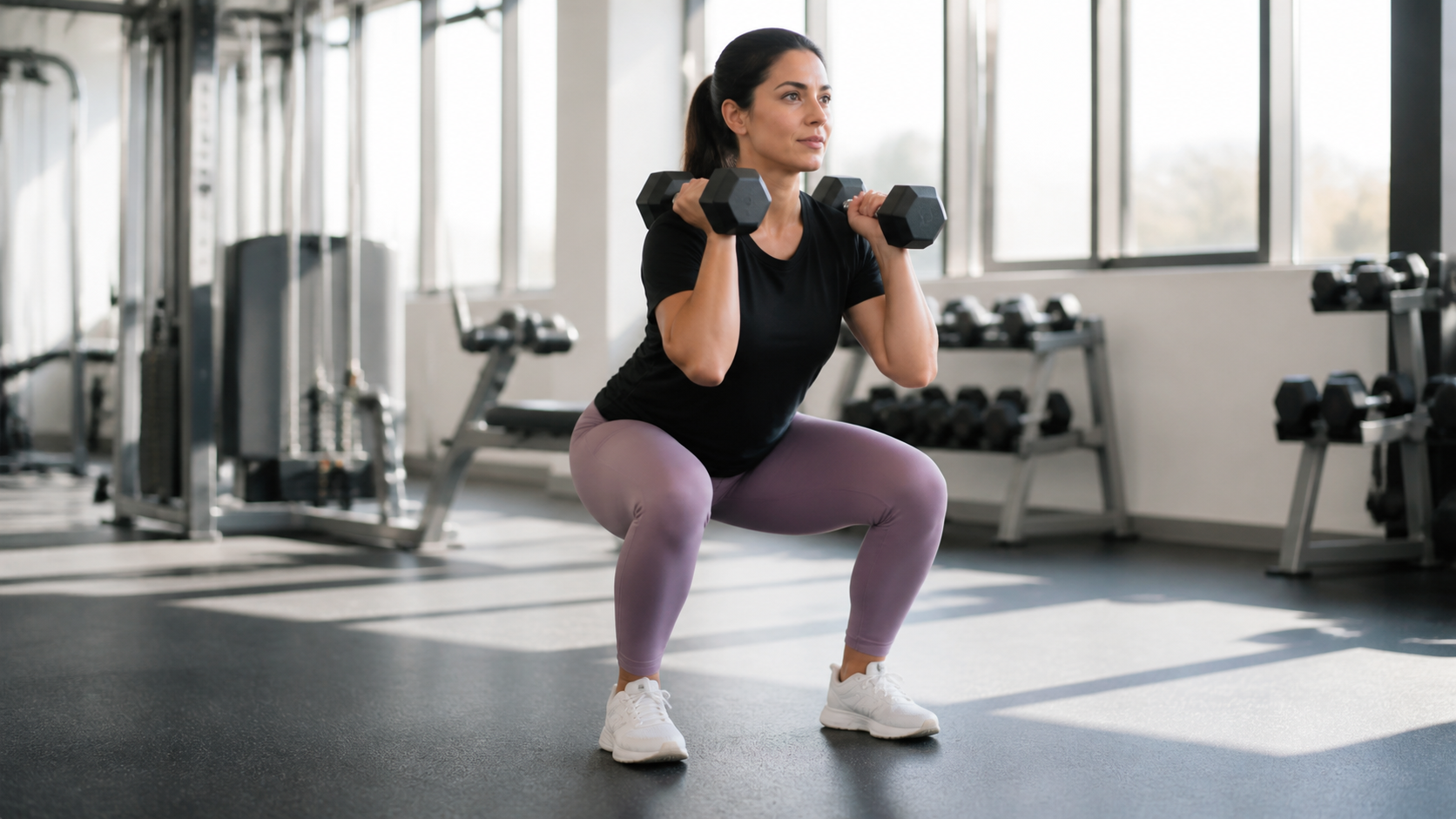
1. Leg press or box squat
Leg press: adjust the seat so your back stays supported and your knees begin in a comfortable bent position. Place the feet around shoulder width, push through the full foot, and lower the platform under control. Do not force the knees toward your chest or lock them hard at the top.
Box squat: stand in front of a stable bench or box. Sit the hips back, bend the knees, lightly touch the surface, and stand. Use body weight first. Holding a light dumbbell at the chest can be a later progression.
Choose the version that feels easiest to control. Ask gym staff to demonstrate the machine adjustment if you are uncertain.
2. Seated leg curl
Align the machine’s pivot with your knee as closely as the equipment allows. Secure the thigh pad, keep the hips against the seat, and curl the lower legs smoothly. Pause briefly, then return the weight without letting the stack slam. The adjustment matters more than using a large load.
3. Supported split squat or low step-up
For a supported split squat, hold a sturdy rail or machine frame, take a staggered stance, and lower both knees through a comfortable range. Keep most of the front foot in contact with the floor. For a step-up, use a low platform, place the full working foot on it, stand tall, and step down under control.
Begin with body weight. Balance and coordination are part of the exercise, so extra weight is not necessary at first.
4. Glute bridge
Lie on your back with knees bent and feet on the floor. Brace gently, press through the feet, and lift the hips until the body forms a comfortable line from shoulders to knees. Avoid forcing the lower back into a large arch. Pause, lower slowly, and repeat.
Body weight is enough while learning. Later, a dumbbell can rest securely across the hips if you can set it up and remove it safely.
5. Calf raise
Use a standing or seated machine, or hold a stable support and perform the movement with body weight. Rise onto the balls of the feet, pause, and lower the heels slowly. Keep the motion controlled instead of bouncing.
How to choose your starting weight
Begin lighter than you think you need. The first set should allow you to complete the planned range with the same controlled technique from start to finish. Finish feeling that two or three more good repetitions would have been possible. If form changes early, reduce the load. If all repetitions feel very easy, add the smallest available amount on the next set or next visit.
How to progress
Keep the exercises and number of sets steady for several weeks. When you reach the top of the repetition range on every set with comfortable control, increase the weight by the smallest practical amount and return to the lower end of the range. This “reps first, weight second” approach makes progress easy to track.
Record the exercise, machine setting, weight, sets, and repetitions. Machine numbers are not standardized, so compare your progress on the same piece of equipment rather than with someone else.
Common leg-day mistakes
- Adding many exercises before mastering a few basic ones
- Using momentum or shortening every repetition to move more weight
- Holding your breath for long periods
- Training through sharp or increasing joint pain
- Changing the workout every week, which makes progress hard to measure
- Doing so much on the first day that normal movement is difficult for days afterward
Frequently asked questions
How long should beginner leg day take?
About 35–55 minutes is enough for the warm-up and five exercises. If you are short on time, perform the leg press or squat, leg curl, and one additional movement with good technique.
How often should beginners train legs?
One dedicated leg day can work, but many beginners train the legs twice through two full-body sessions. Allow recovery between demanding sessions and keep the total workload manageable.
Is soreness required?
No. Mild soreness can occur when an exercise is new, but it is not a score for workout quality. Progress is better judged by improved control, repetitions, load, and consistency.
What if an exercise hurts?
Stop the painful movement rather than forcing it. Check the equipment setup and try an easier range or alternative. Seek qualified medical or fitness guidance for pain that is sharp, persistent, worsening, or associated with an injury.
Source and further reading
This article provides general fitness education. Start gradually, use controlled form, and seek individual guidance from a qualified professional when you have pain, an injury, a medical condition, or uncertainty about an exercise.
Your first leg day: the simple decision guide
Use this quick check before each exercise. The goal is a repeatable session—not walking downstairs sideways for three days.
Adjust the machine or stance before adding weight.
Keep two or three good repetitions in reserve.
Add repetitions first; add a small amount of weight later.
Continue with a beginner-friendly next step
- Follow the complete 3-day beginner plan
- Use the 10-minute gym warm-up
- Choose an appropriate starting weight
How this was prepared: GymTopper created this practical decision guide for beginner use and checked the general recommendations against CDC guidance on physical activity for adults. Read our editorial policy. General education only; adjust training to your ability and seek qualified guidance when needed.
Leave a Reply